
ARGENTINA: ART BY WOMEN; WOMEN FOR ART – exhibition ARTE POR MUJERES; MUJERES POR EL ARTE – exhibición
Reply

Viamonte 1728 2° E (1055) CABA, Argentina. Tel: (54-11) 4371 7581
www.caat.org.ar/ e-mail: info@caat.org.ar
Salón de Mini Textiles – CAAT
Reglamento
El Centro Argentino de Arte Textil (CAAT) convoca, a socios y no socios, al XVI Salón de Mini textiles que se inaugurará en la sala de exposiciones de la sede del CAAT, Viamonte 1728, 2P E, de la C. Autónoma de Bs As, el día viernes 30 de marzo de 2012 a las 19 hs
Requisitos:
– Serán recibidas con destino a este salón, obras de artistas residentes en el país o en el exterior.
– La temática es libre, las obras deberán ser inéditas y se aceptarán todas las técnicas y materiales que se comprenden dentro del arte textil.
– Se aceptarán hasta dos (2) obras por participante.
– Las medidas máximas serán de 20 cm de alto x 20 cm de base en obras bidimensionales (soporte incluido) y 20 cm de alto x 20 cm de base x 20 cm de ancho en obras tridimensionales (soporte incluido), sean de apoyo o espaciales.
– Las obras deberán estar preparadas para ser exhibidas y rotuladas en el reverso de la obra, con los siguientes datos: título de la obra, medidas, técnica, autor, año de ejecución.
– Se ruega completar el formulario de inscripción que se adjunta al reglamento.
No admisión:Los plagios y las obras producidas por más de un autor.
Premios:
Se otorgará 1° premio (no adquisición) $ 500 y diploma.
2º y 3º premio (no adquisición) libro de arte y diploma.
Se otorgarán menciones a criterio del jurado.
Premio especial ETI-EXPRESS de $500 otorgado por dicha empresa
Los autores que hayan obtenido el 1º Premio en salones anteriores de Mini textiles convocados por el CAAT, no podrán aspirar a obtener un premio equivalente por el plazo de 2 años.
Recepción
En la sede del CAAT: martes 13 de marzo de 2012 de 15 a 18:30 horas.
Para envíos desde el interior y exterior, se recibirán en la siguiente dirección: 11 de septiembre 2761- C.P. 1428- Buenos Aires- Argentina. Fecha límite 13 de marzo de 2012.
Inscripción:
Única cuota de inscripción por participante $30 para asociados al CAAT y $60 para no asociados. Para el exterior: Asociados u$s 20 – No asociados u$s 40.
Gastos de envío y devolución de las obras estarán a cargo de los artistas participantes exclusivamente.
El CAAT no se hará responsable en ningún caso por los gastos de envío y devolución de las obras, ni de trámites aduaneros.
El CAAT velará por la buena conservación de las obras, pero no se hará responsable por la eventual pérdida de las mismas.
El solo hecho de presentarse a este salón, implica la aceptación del presente reglamento por parte de los participantes. Todo caso no previsto será resuelto por la Comisión Directiva.
Recordar que desde el 16 de diciembre al 31 de enero de 2012 el CAAT permanecerá cerrado por vacaciones.
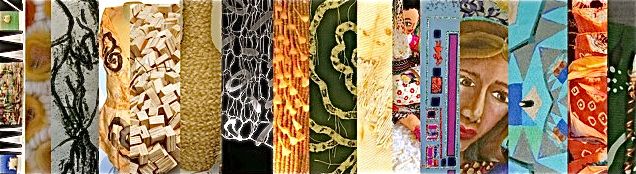
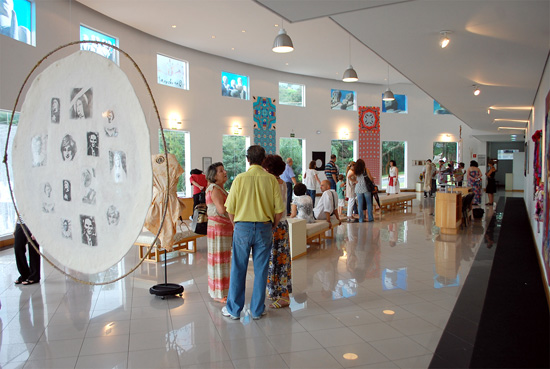
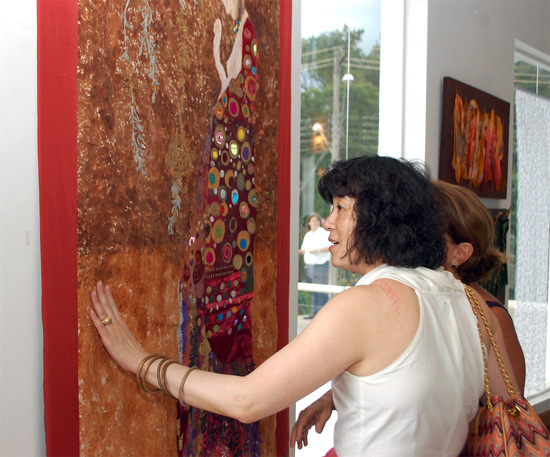
March 6 – 24, 2012
Tuesday through Saturday from 10:00am to 5:00pm
Victor Brecheret Convention Centre, São Paulo, Brazil
Curator: Zilamar Takeda
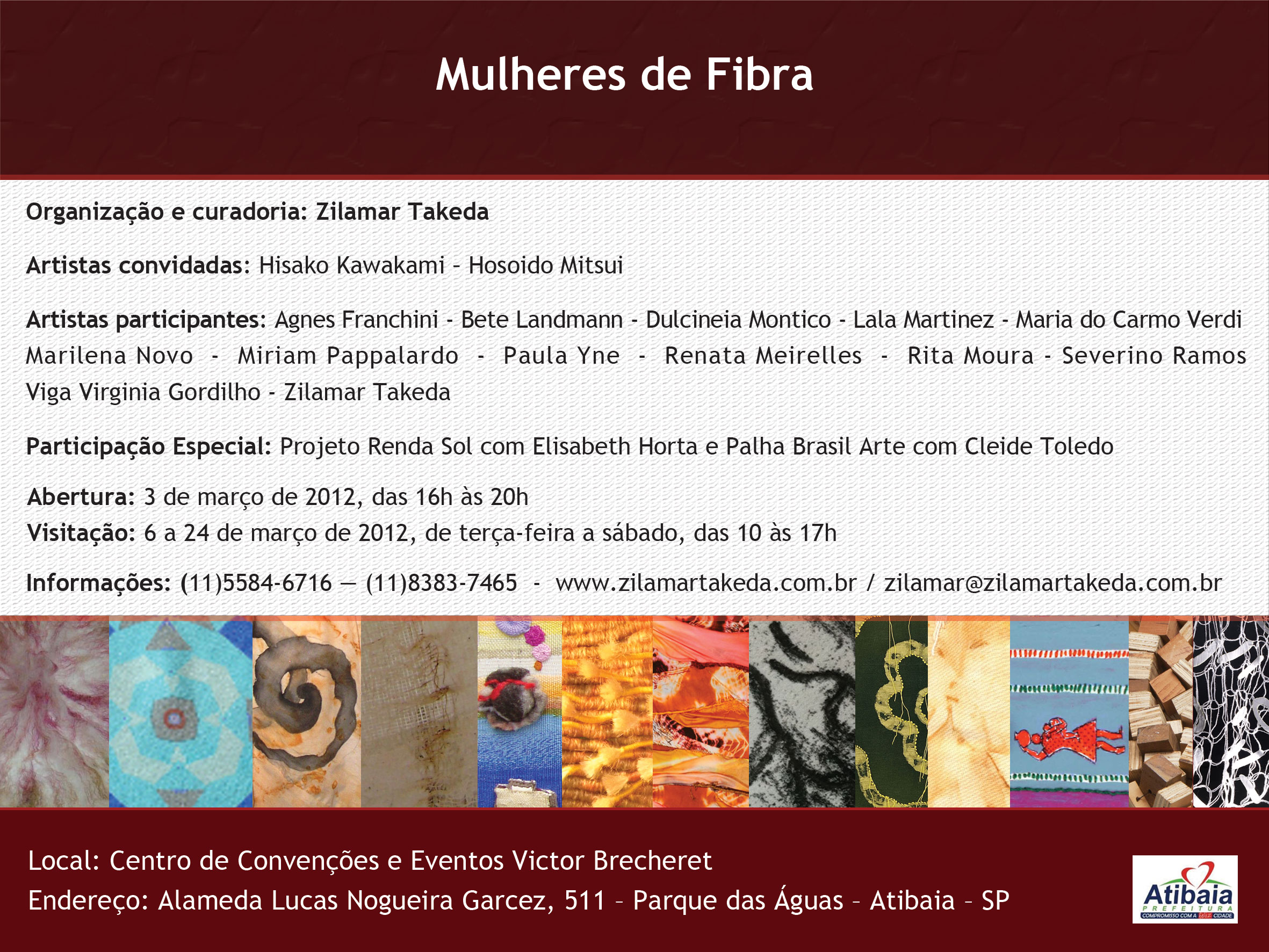
Participating artists: Agnes Franchini – Bete Landmann – Dulcineia Montico – Lala Martinez – Maria do Carmo Verdi – Marilena Novo – Miriam Pappalardo – Paula Yne – Renata Meirelles – Rita Moura – Severino Ramos – Viga Virginia Gordilho – Zilamar Takeda
Special guests: Renda Sol Project, with Elisabeth Horta & Palha Brasil Arte, and Cleide Toledo
Information: zilamar@zilamartakeda.com.br
—Silvia Piza-Tandlich, translation
Oaxaca, México. French artist Michel García—one of the world leading experts in sustainable natural dyeing—is giving some workshops at the beautiful Centro de las Artes de San Agustín (formerly a huge textile factory), from March 12 – 20, 2012.
El artista francés Michel García, uno de los grandes expertos en tintes naturales sostenibles, ofrece talleres en CaSa (Centro de las Artes de San Agustín y antigua fábrica textil de Oaxaca), del 12 al 20 de marzo.
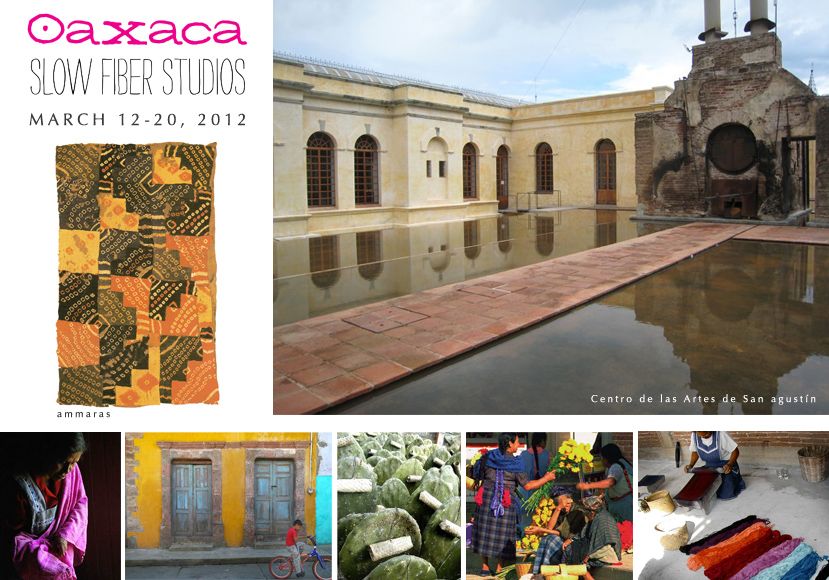
SLOW FIBER STUDIOS™ OAXACA 2012
ColorFest: Exploring Primary Colors (cochineal, indigo, yellow)
Explorando colores primarios (cochinilla, índigo y amarillo)
Natural Dye Workshop with Michel Garcia • Ikat Weaving • Paper Making •
Zapotec Field Trips • Local Culture
Talleres en tintes naturales • Ikat • Papel picado • paseos Zapotecas • cultura local
MARCH 12-20, 2012 (suggested arrival/llegada: 3/11, depart/salida: 3/21)
Springtime excursion inspired by the colors of amarras Pre-Columbian textiles
Paseo de verano inspirado por los colores de amarras precolombinos.
Explore Oaxaca and the vibrant natural dyes for which the area is famous.
Explore Oaxaca y sus tintes naturales que la hacen famosa.
Natural dye expert and world traveled botanist, Michel Garcia of France, will lead an eye-opening series on the primary colors of the Americas – indigo, cochineal, and yellow. The workshop will explore sustainable processes on animal fibers.
Sessions will be conducted in and out of the classroom, with hands-on technical training plus field visits to an ethnobotanical garden and a cochineal farm.
Our program will connect participants with local master artisans who will instruct us in traditional crafts that sadly are fading, like jaspe rebozo (ikat shawls) from Tenancingo, and papermaking.
Standout Oaxacan attractions included in our activities: the MUSEO TEXTIL de OAXACA (March exhibition will be “Herencia de moros, alforjas, alfombras y almohadas”); JARDIN ETNOBOTANICO de OAXACA; and ZAPOTEC ruins. Other Oaxacan traditions sure to inspire: stitch-resist dye traditions; papel picado (paper cutting), tapestry weaving with natural dyed wool.
We are fortunate to have as our base the beautiful artists facility of el CENTRO DE LAS ARTES DE SAN AGUSTÍN (CaSa) with support from Trine and the founder, artist Francisco Toledo—one of Mexico’s greatest living artists and a Oaxacan native. CaSa is a 20-30 minute drive from downtown Oaxaca.*Our participation helps CaSa offer more affordable instructions to local artisans and organizations.
http://www.casanagustin.org.mx | http://www.museotextildeoaxaca.org.mx | http://www.jardinoaxaca.org.mx
PROGRAM PRICE: $880.00 USD
Does not include airfare or hotel
Slow Fiber Studios™ is a program of the World Shibori Network
More information: Lala de Dios www.indigotextil.com

 Calle Independencia & Plaza Manzana Uno
Santa Cruz de la Sierra, Bolivia
 Manzana 1 Espacio de Arte is a not-for-profit art gallery located in the historical center of downtown Santa Cruz de la Sierra, Bolivia. It is called Manzana 1 because it is found on the city’s first block. The building, which has been acknowledged as part of Santa Cruz’s historical legacy, was formerly the headquarters of the National Police and, after 13 years of neglect, it was opened once more, this time as a cultural space in 2005.

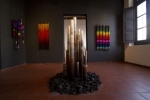
Beatriz Oggero is a Uruguay-born artist living in Cochabamba, Bolivia.
Contact Beatriz: www.beatrizoggero.blogspot.com
—Silvia Piza-Tandlich, translation
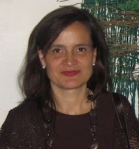 Marianne Werkmeister’s “Window to the South” (Ventana al Sur) exhibition is being presented the entire month of February, 2012 at Hotel Termas Puyehue in the 10th region of Chile.
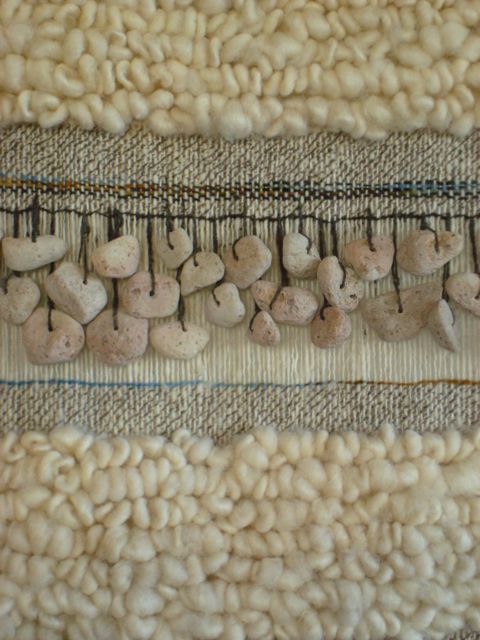
This new show is inspired by the wonderful landscape in neutral and grey hues, with pumice stones from the Caulle volcanic range, and very thick yarns.
The following work is from the “Stone Sea” series, followed by one of “Ventana al Sur” pieces.
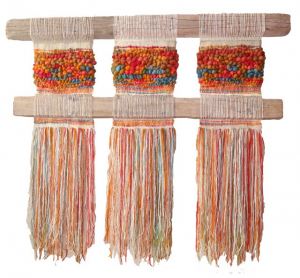
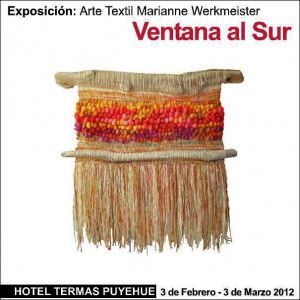
Marianne Werkmeister, Textile Design
http://artetextilmarianne.blogspot.com
Termas Puyehue Hotel is located in the 10th region of Los Lagos at the foot of the Andes. It overlooks the impressive Puyehue National Park: a Nature sanctuary embracing 107000 hectares of beautiful forests, rivers and lakes, which was declared UNESCO’s biosphere reserve.
Address: Puyehue Ruta 215, Km 76 | Osorno, Puyehue 64, Chile
Pronunciation: Puyehue /poo-yeh-weh/
—Silvia Piza-Tandlich
Graciela es tejedora artística, nacida en Mendoza, Argentina. Su trabajo es una mezcla ecléctica del tapiz tradicional y su propio diseño contemporáneo.


Graciela Cicognani


Graciela Cicognani: "Depths"
Visit Graciela’s blog: www.tramadelsol.wordpress.com
E-mail: hilosytramas@gmail.com
Posted by: Silvia Piza-Tandlich
Cuyo is the name given to the wine-producing, mountainous area of central-west Argentina. Culturally it comprises the provinces of San Juan, San Luis and Mendoza, with an incredible Andean weaving tradition dating back to pre-Columbian times of the Incas and Quechuas.
This beautiful area extends westwardly into the Andes mountain range, and includes the highest peak in South America: the Aconcagua. From here you can cross borders into Chile through the Paso de Vacas pass (so long as it’s not too snowy).
—Silvia Piza-Tandlich
 opustextile