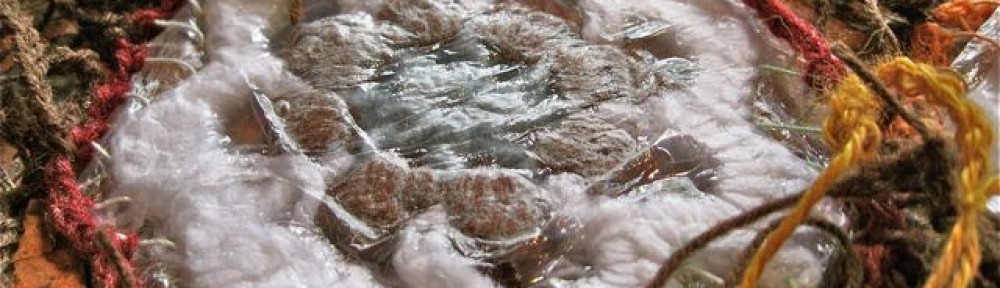
Wooden Knife Troubadour Takes To the Alley On Sunday – CUCHILLO ‘E’PALO EN EL CALLEJON

ALAJUELA, COSTA RICA:

Many artists (myself included) feel they must use their visual message to get closer to the people and of course, art must have social projection. Pristine walls to show our work don’t always let us reach everyone, not to mention the fact that often times our political message isn’t compatible with fancy places that could be intimidating to some people.

Algunos artistas, de los cuales no soy excepción, creen en su deber de hacer entrega de su mensaje visual de una manera más cercana a la gente y, por supuesto, su arte debe tener proyección social. Las paredes elegantes para exposición no siempre le llegan al público y nuestro mensaje político no es compatible con lugares elegantes, los cuales a veces más bien intimidan.

Therefore, it is safe to say that our identity is anchored by the way we project—and to whom, and in the case of Carlos Vargas Olivares, where.

Nuestra identidad está anclada en la manera en que proyectemos, y a quién, y en el caso de Carlos Vargas Olivares, dónde lo hagamos. 

How: Carlos tickles and plays and pokes until he provokes what he refers to as, “our honest spot within ourselves,” making us recognize at least some of the multiple messages in his work. He wants to recycle, and help in the integration of bamboo structures as a green renewable material: presently he is searching for ways to include Costa Rican cabuya (sisal) braiding in the knotting of intersections of modular bamboo pieces, with the intention to create sustainable design alternatives.

Cómo: Carlos juguetea y provoca lo que describe como “el botón honesto dentro de nosotros”, para que reconozcamos algunos de los mensajes de su obra. El recicla y ayuda en la integración de estructuras de bambú como material orgánico renovable: actualmente explora maneras de incluir cabuya trenzada de Costa Rica en las intersecciones de piezas modulares de bambú, con intención de crear diseños alternativos sostenibles.

To Whom, and Where: To anyone who gets lured into his concept of “chunche” corner (chunche is Costa Rican slang for whatchamacallit), out there on a public park in the province of Alajuela, Costa Rica, where he’s been taking his Sunday installations for the past year. The motive is to show recycling within sisal knits, and trigger questions which trigger chats and awareness. Sisal has a wonderful aroma, and Carlos (aka Cuchillo’e Palo, or “Wooden Knife” in English), adds it to the entire sensorial setting in order to evoke time, space, and smell. He is, indeed, a weapon of art projection!
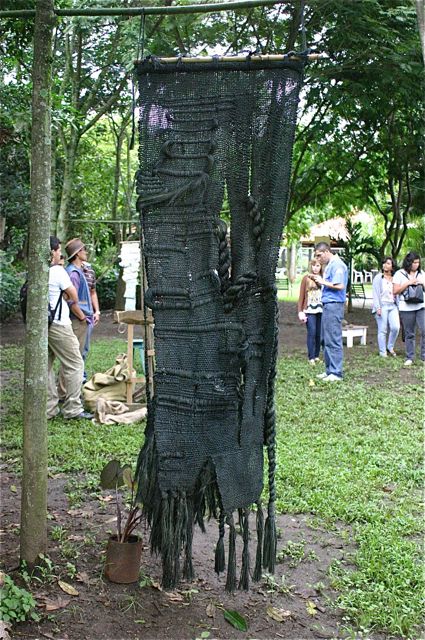
Para Quiénes, y Dónde: Para quienes se acerquen a su concepto de “esquina de chunches” (chunche es la palabra costarricense para definir cualquier cosa de la que no recordemos su nombre), allí por el parque de Alajuela en Costa Rica, en el pasaje donde ha venido llevando sus instalaciones los domingos, por un año. El motivo es mostrar sus tejidos en cabuya y provocar preguntas que provoquen tertulia y conocimiento. La cabuya tiene un delicioso aroma y Carlos, conocido como Cuchillo’e’Palo, usa ese aroma como parte de todo el conjunto sensorial, para evocar tiempo, espacio y olor. El es, sin duda, una arma de proyección artística.What: Jack-of-all-textile trades, and when it comes to style Carlos has coined his own label, which translates to “junk/object” although he’s also interested in experimentation, murals, mixed-media textiles, and ceramics.
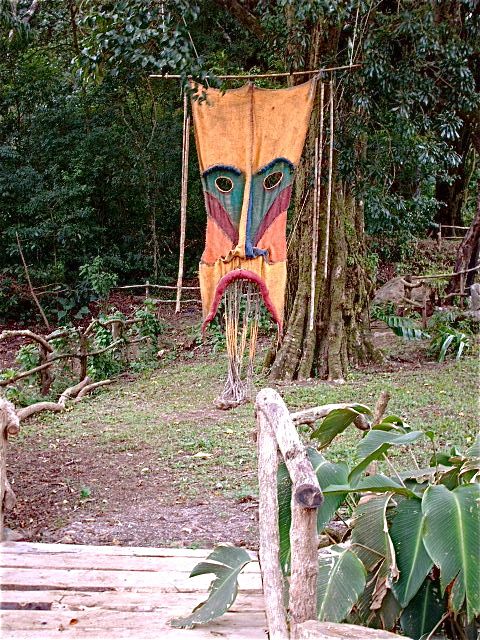
Qué: Hombre banda y cuando se trata de estilo, Carlos ha creado su propia etiqueta: “chunche objeto”, aunque también trabaja en experimentación, murales, textil de técnica combinada y cerámica. 

Contact: http://www.carlosvargasolivares.blogspot.com
—Silvia Piza-Tandlich
Notice: Carlos suffered a great fall from one of his structures recently, and it is my wish that he recovers soon and gets back to his alley!
Nota: Recientemente, Carlos sufrió una gran caída de una de sus estructuras y espero que se recupere y vuelva a hacer presencia en su callejón.

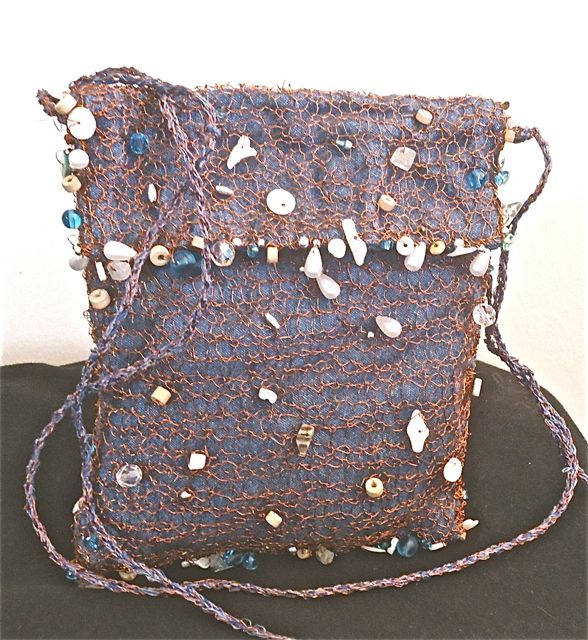
Sprang bags for sale – CARTERITAS A LA VENTA

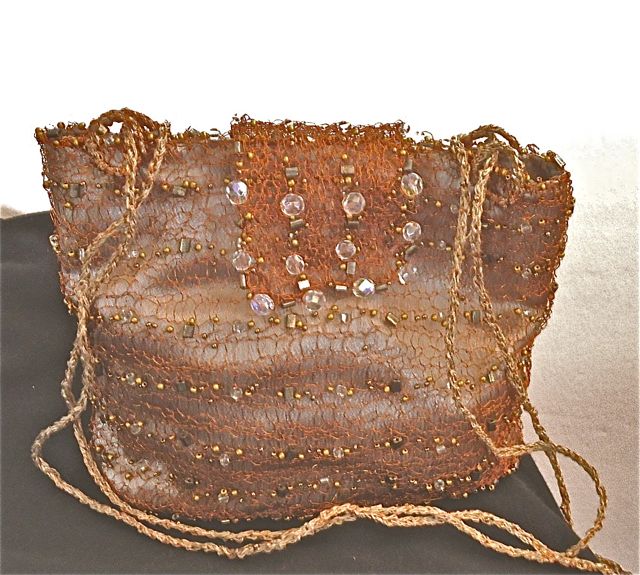
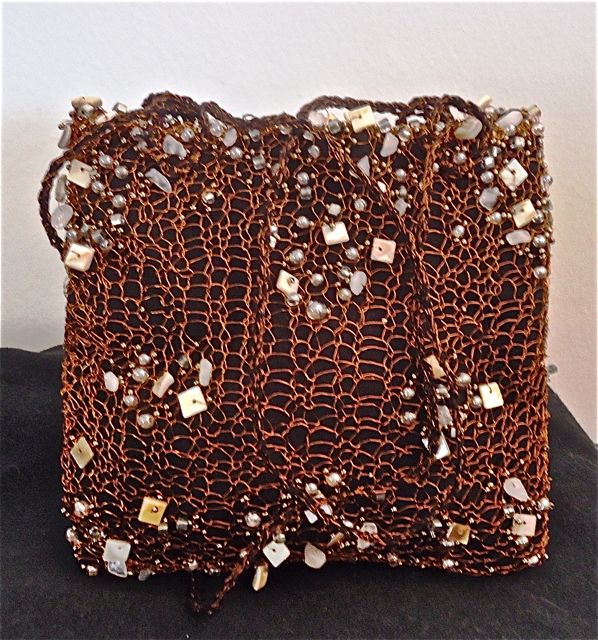
 They measure 6″ X 8″ (15 X 20 cm) and are absolutely adorable.
¡Miden 15 X 20cm y son divinas!
We have seen Beatriz Oggero’s beautiful, monumental sprang pieces (warp weaving)
hanging handsomely in museums and galleries.
Now she claims to make the little bags “during spare time”.

 Ya hemos visto las obras monumentales de Beatriz: piezas hechas en la

técnica sprang,
 las cuales cuelgan en museos y galerías de arte.
 Ahora ella dice hacer estas carteritas “en su tiempo libre”. ¡Dichosa!

Contact: 

Beatriz Oggero, Cochabamba, Bolivia
Phone: +591 4440 6940
Please see the article below to appreciate one of Beatriz’s works in sprang technique.


—Silvia Piza-Tandlich, translation

11th ART INTER/NATIONAL COMPETITION

SDA members Silvia Piza-Tandlich (Costa Rica), and Irina Dorofeeva (Russia) have been selected to exhibit in this year’s 11th Art Inter/National competition. These two selections are the only textiles pieces chosen from over 500 proposals from all over the world in all artistic mediums.

Nicole Cappozi, owner and director of BoxHeart Gallery, explains: “The basis for an invitation to participate in The Art Inter/National Exhibition is sensitive to the diversity of work submitted; Box Heart strives to recognize that artists make art for different reasons and from different experiences. Box Heart looks closely for works that convey evidence of personal creative explorations and artistic commitment that directly relate to the purpose of the exhibition. A large part of determining the artist’s commitment to the exhibition’s theme rests solely on their ability to convey this evidence through the artist statement. The execution of the art work – as related to the artist’s intention – is then considered. Over 500 entries, from regional, national, and international artists, were received this year. Of these entries, 20 artists were selected for participation and 25 works of art in a variety of media will be exhibited.

With an ability to see scenes as a collection of lines, shadows, shapes, and contours, artists tend to see the world as it actually is. This form of seeing is the impetus behind all change. And when manifested into art, becomes the foundation for a scientifically informed account of the mind. The artwork selected for this year’s Art Inter/National Exhibition is unified by a wider appreciation for the many dimensions of uncertainty.” 

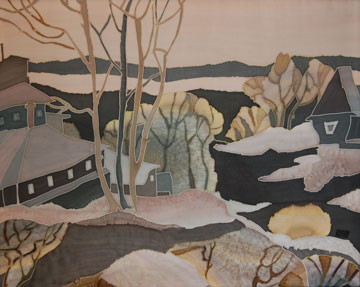
 Artist Irina Dorofeeva grew up in Russia and later moved to Indiana, USA. Often her silk works focus on nature and are inspired by landscapes, both Russian and American. She is touched by the remembrance of forests, fields, rivers, and small countries in Russia. But she is also inspired by the beautiful lakes, mountains, and shore lines in the U.S.. All these themes interconnect in her work and are the source of her art.

Silvia Piza-Tandlich is SDA Latin America/Caribbean area REP. Her handmade work, “Still In Time” is a point of convergence of past and present materials and techniques depicted in a double-sided Indigenous piece hanging from the ceiling.

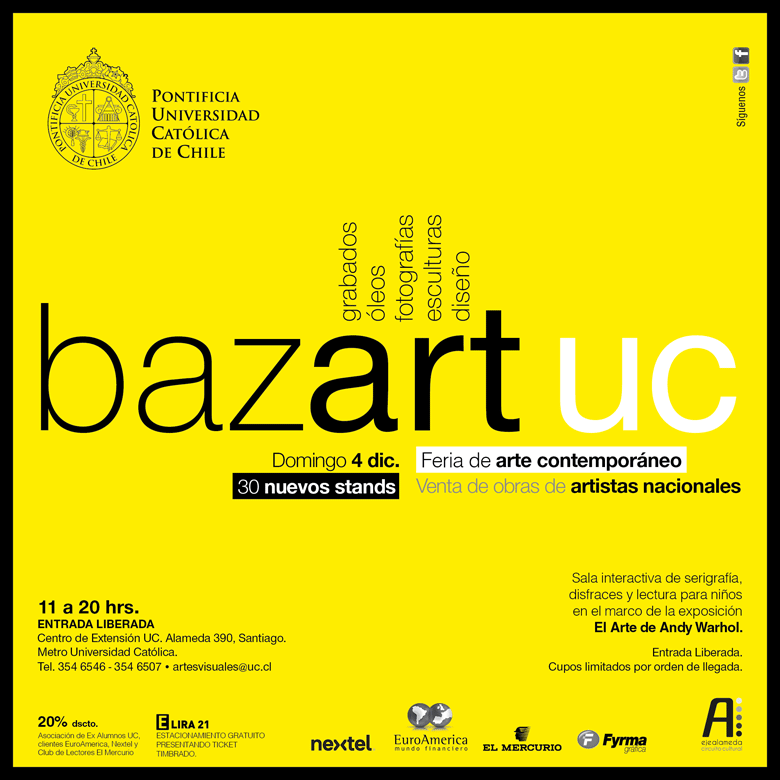
3rd BAZART UC in Santiago, Chile

If you happen to be in the neighborhood this Sunday, December 4, Pontificia Catholic University of Chile presents the Third BazartUC Fair of Contemporary Art, featuring 30 stands with works by national renown and emerging artists. Entrance free of charge.

There will also be an interactive salon about the Art of Andy Warhol, with an engraving workshop, costumes and children activities.


Textile artists Andrea Fischer and Inge Dusi are active participants in this event.

The address if on the lower left hand side of the invitation for your review.

—Silvia Piza-Tandlich, translation

Identity fashion from 10 Argentine provinces

The National Culture Secretariat represented by the program, “Productive Identities”  
and the National University of Mar del Plata
proudly present 

PRODUCTIVE IDENTITIES, SERIES 1 X 10

Wearable accessories collectively created and produced by 680 crafting designers from ten provinces of Argentina:

La Pampa, Santa Cruz, San Juan, Chubut, Santiago del Estero, Formosa, Jujuy, Chaco, Mendoza, and Río Negro.

Fair, Show, Parades, Workshops, Live music

 December 7 – 10: 10am – 9:00pm

Free of charge

Address: Manzana de las Luces, Perú 294, City of Buenos Aires, Argentina


—Silvia Piza-Tandlich, translation


Colombian Indigenous Material Culture – Part 1

The following is my translation of Martha Alvarez’s conference at the 6th WTA International Biennial of Contemporary Textile Art in Veracruz, Mexico. I find Indigenous cultures a fascinating source of inspiration and stamina from the human point of view, far beyond being the textile basis we already knew about.              —Silvia Piza-Tandlich

Indigenous Material Culture Within the Global Frame of Contemporary Crafts

This conference poses reflection upon the present situation and weaving practices—as well as their resulting objects of material culture, within the context of the Indigenous world—interferences in these practices, and changes generated in order to introduce objects into the global market.

1. Indigenous Material Culture & Crafts

A society’s material culture arises in order to provide the necessary elements to satisfy utility and ceremonial basic needs as far as housing, transport, attire and accessories. To Indigenous groups these are objects of identity, world representation and, at the same time, an extension of the universe.

Maruamake – Kogui village

The object is made in a tight relationship between the Indigenous and their natural environment, allowing self-stocking up with materials that are going to transform, with a permanent dialogue with their surroundings.

Kogui dwelling in progress – Sierra Nevada

Generally, weaving is a feminine occupation and gathering materials is a masculine task, with few exceptions such as the case of Arhuaco, where man gathers material and weaves cotton for his characteristic attire and cap. Since the woven object is produced and matter is transformed by the Indigenous themselves, they don’t have a real understanding of the value it might have at market, which is the reason why many times intermediaries buy it cheap, and sell it for a lot of money.

Embera woman at work

It is important to mention that the woven object carries a great symbolic and cosmogonic charge upon its creator and the bearer. An arhuacan bag is designed and created according to the person using it, because it denotes the comings and goings of its owner’s life, which is to say the thread is the course of life itself. Werregue basketry shows an entire shamanistic ceremony, or a daily scene such as weaving, thus turning us into its collocutors.

Arhuaca bags

These elements become crafts when produced in series with the aim to exchange them, supply a market, and receive supplemental income, thereby losing a great deal of its primal intent.

Colombia has over 80 Indigenous cultures who own an ancestral weaving legacy: basketry, cord making, needle and loom knitting. Some stand out for the aesthetic value of their elements, such as Wayuu, Wounaan, Embera, Sinú, Kogui, Arhuaca, Cofán, and Inga—to name only a few. Each has specialized in distinctive products, well-liked in national and international markets (more so the latter), such as the case of Werregue and Wounaan baskets, or Wayuu and Arhuaca bags, or Embera and Inga chaquira (beaded) knitting, or Cofan and Inga belts.

Embera woman, weaving

These elements come as legacy from trade, myth, and tradition, generation after generation. They are preserved thanks to having daily-use character and, through time, they have transformed due to external influences. That is how certain fibers get replaced, and natural original pigments become synthetic. Shape and color are also changing due to trends, globalization, or more competitive market demands.

Werregue baskets

Due to the great aesthetic, practical, and ethnic value of Indigenous knits, their products have become popular in craft markets, and with collectors and specialized galleries, formalizing its creators’ role within artisan associations. Now with this status plus active entry into the artisans’ sector, they can receive ongoing capacitation and consulting such as the agreement between Indigenous authorities and Artesanías de Colombia (“Crafts of Colombia”)or some other specialized outfit, offering capacitation in the fields of organization for production, administration and business development, capacitation and consulting in crafting processes, design and re-design, innovation, product development, and marketing.

U’wa grandmother, knitting

I would say there are two clear lines of production: tradition, and innovation or intervention. In the latter the industrial designer gives instruction as far as transformation of material culture objects, orchestrating and/or sometimes imposing criteria, which sometimes lacks knowledge of ethnic processes and dynamics, and even disrespecting know-how, practice, and tradition. These resulting products are in great demand in certain marketing segments, but they’re not taken inside the community for obvious reasons.


Author, Martha Liliana Alvarez Ayala is a Colombian textile artist, consultant and independent researcher.

Contact: http://marthalvarez-textil.blogspot.com/

Phones: 057+ 3112635283   – 3015991000


Colombian Indigenous Material Culture – Part 2

The following is my translation of Martha Alvarez’s conference at the 5th WTA International Biennial of Contemporary Textile Art in Veracruz, Mexico. I find Indigenous cultures a fascinating source of inspiration and stamina from the human point of view, far beyond being the textile basis we already knew about.             —Silvia Piza-Tandlich

Indigenous Material Culture Within the Global Frame of Contemporary Crafts

This conference poses reflection upon the present situation and weaving practices—as well as their resulting objects of material culture, within the context of the Indigenous world—interferences in these practices, and changes generated in order to introduce objects into the global market.

SENA Fashion

2. Hand-Crafty Colombia

Nearly one million Colombians live directly or indirectly off of the crafts sector, greatly contributing to the national economy. There are some 450,000 artisans, 60% coming from rural areas and Indigenous communities, and about 65% being women.

Weaving hammocks

The Artesanías de Colombia (“Colombia Handicrafts”—entity that regulates everything related to crafts in my country—has categorized and characterized the sector in three groups:

Embera basket

Indigenous handicrafts: Production of entirely useful, ritualistic, and aesthetic goods, conditioned directly by physical and social environments, constituting a material expression of culture in communities with ethnic unity, but relatively self-contained. It represents live Pre-Colombian heritage with a certain level of development.

Knitting woman

Popular handicrafts: Production of objects that are both useful and aesthetic, made anonymously by a community exhibiting complete domain over materials which are generally from each area’s habitat.

Contemporary crafts, or Neo-crafting: Production of useful and aesthetic objects within the frame of trades, whose processes offer convergence of technical and formal elements coming from other socio-cultural contexts and techno-economic levels.

During more than a decade there has been a surge in the handicraft environment bringing forth great recognition to the handcrafted product. This phenomenon has encouraged the sale of objects with design, generating enthusiasm in this type of competitive production that can be introduced to global markets.

Another prevailing characteristic is the fusion of techniques and materials: for example, you can find a traditional ceramic vessel with a decorative motif in basketry.  This added value has considerably elevated sales of these products.

3. The Wayuu Case 

The Wayuu have their settlement in the Guajira Peninsula bordering Venezuela. They have an ancient knitting tradition and create multiple objects—especially blankets, hammocks and mochilas (circular-based bags with tubular body made with needles, with woven or gauze straps).

Wayuu mochilas

Nowadays, their products present the greatest intervention from industrial and textile design, to fashion design. They can be seen at international catwalk shows, boutiques, and mingling with all sorts of objects to the point of it not being easy to recognize whether they’re original Wayuu, or not.

PROENSA fashion bag

The traditional strap, which is part of the mochila is now woven alone by the thousands, and is sold as prime material to the creation sector and leather industry. Thus, it becomes a disarticulated piece far from its essence, and prostituted by commercialization greed.

Design by Silvia Tcherassi

At the Expocrafts International fair being held in Bogotá for over 20 years, you can notice that the Wayuu stand that had a shy presence long ago, has given way to over 20 in 2010—some specialized in accessories and fashion—and next to them you can see Wayuu women promenading with their “latest designs”—objects not even they can describe when I have asked about them: blankets with trendy finish and ornaments, pricey accessories, mochilas turned into backpacks…indeed, all sorts of interventions making the originalobject unrecognizable.

Many women come to my workshop wanting to explore and learn textile techniques, and for about two years I repeatedly hear requests: —”I want to learn to knit belts, cords and Wayuu mochilas, because it’s what clients ask for all the time.” I usually wonder, and question them, “What would they feel—what would women who bequeath tradition think, when they see what their culture turns into?” They don’t answer…

Author, Martha Liliana Alvarez Ayala is a Colombian textile artist, consultant and independent researcher.

Contact: http://marthalvarez-textil.blogspot.com/

Phones: 057+ 3112635283   – 3015991000 
Colombia

3rd Encounter of Natural Fibers in Uruguay


3rd Encounter of Natural Fibers

When:    October 21 – 23, 2011

Where:   Día del Patrimonio en Castillo Piria in Piriápolis,       Uruguay

Local artistic creators will celebrate their live cultural patrimony by generating participation and awareness with their natural environment. Discussion groups, networking, expositions and workshops.

Contact: Graciela Miller http://facebook.com/artegracielamiller

—Silvia Piza-Tandlich


The 60’s revisited and doing good social work

I arrived in Davis, California in 1976 and as it turns out, being too young in the 1960’s made me miss out on most of the hippie macramé curtains and tie-dyed shirts, although I still have the book, “Quilting, Patchwork, Appliqué, and Trapunto” by Thelma R. Newman, which I got for Christmas. Now in plain 21st century, I didn’t easily recognize a renaissance of the same campy elements and political thinking that characterized the 60’s, which might have to do with a change of era and its sociopolitical repercussions—just as it did back then. No need to remain hippie, however, because nowadays this artistic language goes by the label Decolonial Art since it emphasizes in questioning the so-called hegemonic culture.

—Silvia Piza-Tandlich

Alejandra Gutiérrez: Wonderbra.

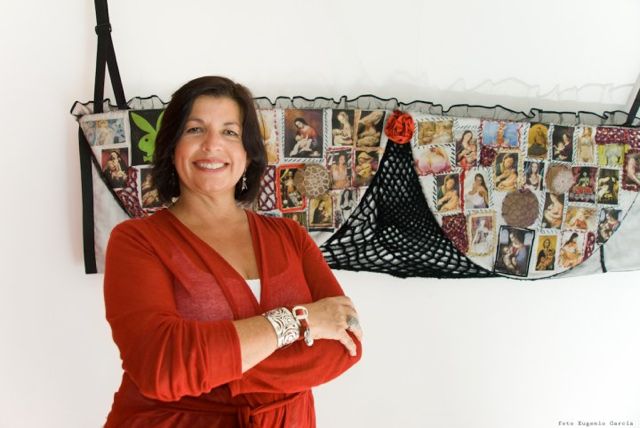
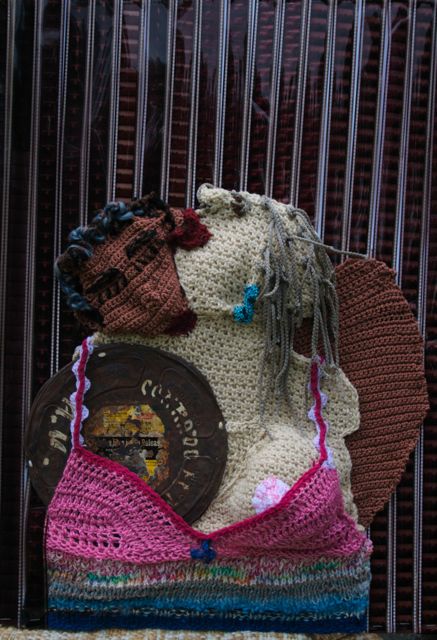
Last year I saw an article in the local paper about Costa Rican artist, Alejandra Gutiérrez winning Special Award at the 4th Latvia Triennial of Fiber and Textile Art, with a huge Wonderbra measuring 165 x 220cm (5.4 x 7 feet).  Her message was clearly political and clearly feminist in a Latin American world of macho dominance and social by-standards, and very fitting within other contexts throughout the world. From the textile point of view, however, what really caught my eye was the seemingly clumsy or bungled way of arranging otherwise fine elements…as if the piece was actually intended to convey two messages instead of one. It wasn’t until this week that I came to recognize the 1960’s style in Alejandra’s work, which can be camp, pop, “low” or whatever new twist may be resorted to in order to make her art transcend.

Alejandra in her studio, with "Catadupa Admirabilis" ("Splendid Waterfall") in the foreground.

Alejandra is very successful in creating a social structure through textiles, and dedicating her vast artistic creation to empower herself as well as the lives of other women around her. Her themes deal with the effects of gender disparity and social critique in today’s society. Curator Marcela Valdeavellano explains: …she strives to make art that asks us to reconsider the significance of both image and context, which may provide new understanding of how the two collide to shape our culture.”

“… MON 810 protests a species of transgenic corn, which belongs to the technology called Terminator, which causes transgenic seeds to become sterile. This property will radically alter traditional methods of agricultural production in benefit of corporations, in obvious detriment of our traditional agriculture where corn is a staple…”          

Alejandra Gutiérrez: Movie-Style Kiss. Mixed media textiles, 2009.

“… The society of show business has permeated our lives and now we no longer know what is true and what is Hollywood celluloid…” 

A Scholar at the International Textile and Apparel Association in California, USA, Alejandra is one of the two Latin American artists who were finalists in the above mentioned Latvia Triennial, being the only Central American who has earned this distinction.

In 2009, the Cajías Cultural Foundation in La Paz, Bolivia acquired her work MON 810, selected for the SIART Biennial of Art, Bolivia. On that same year she won the Acquisition Prize by the Helmspark Gallerie for her tapestry, in which she refers to the issue of breast cancer.

Alejandra Gutiérrez: Movie Star. Apparel Award by Fiberats Magazine/VISART, 2009.

In April 2010, Alejandra was also a finalist in the contest by the late Fiberarts Magazine and VISART Arts Center, Maryland, USA, “Wearable and Unwearable Art,” participating with an evening bag built with movie strips from the 1960’s, which she named “Movie Star”.

 Contact:
+506 2228-5522 atelier   –   +506 8882-2727 mobile
P.O Box 1525-1250, San José, Costa Rica
alegutierrezm@gmail.com
blog: tejolavida.wordpress.com
 

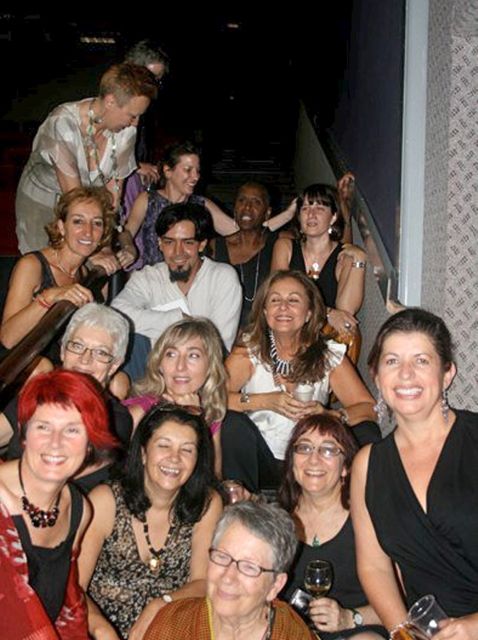
The following photographs were taken during the 6th WTA Biennial of Contemporary Textile Art in Mexico, where Alejandra participated as a lecturer:

Xalapa, Mexico, 6th WTA Biennial opening.

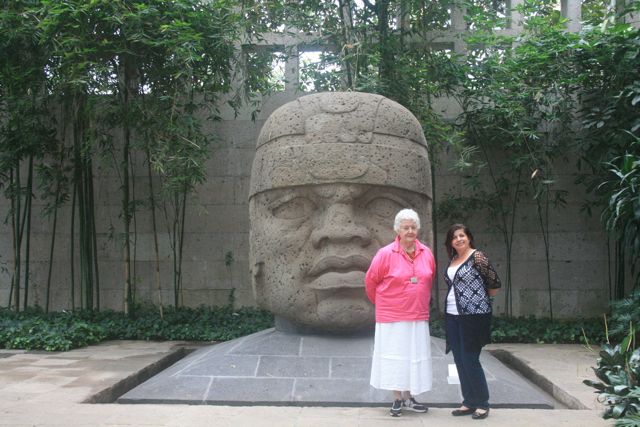
Sheila Hicks and Alejandra Gutiérrez in Mexico.

Sheila Hicks and Alejandra Gutiérrez, Mexico, 2011.