 Cultura indígena de Costa Rica viaja a Eslovaquia convertida en arte

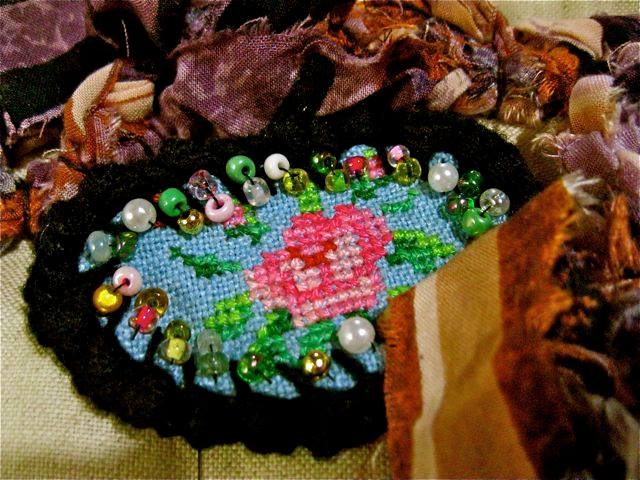
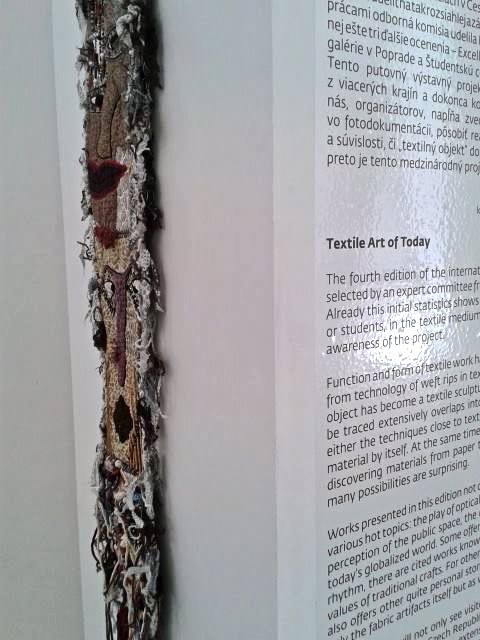
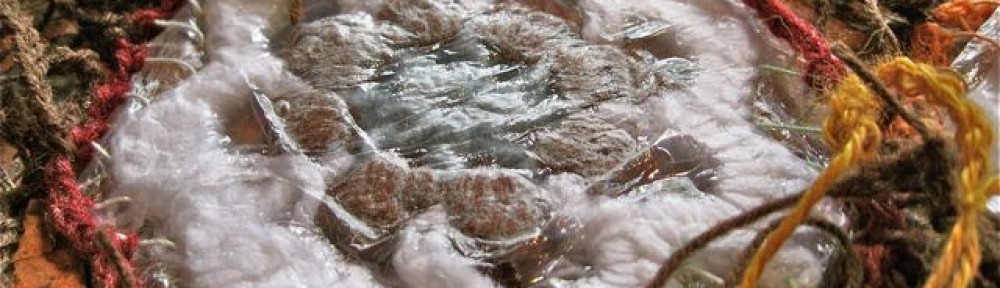
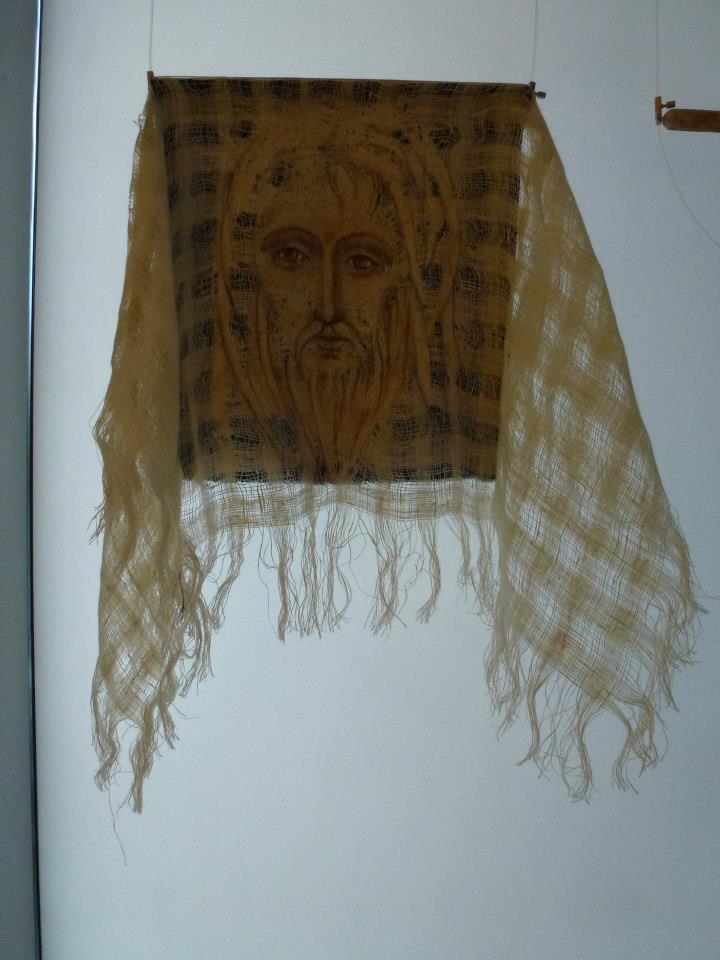
 Poland, August 22, 2014 to the end of 2015 – Krosno Museum of Crafts
It is a great honor to receive a Jury nomination in this Linen Biennial competition, alongside very creative and talented artists from highly textile countries.
The show will also be presented throughout Poland, including its participation within the Biennial of Small Woven Forms. It will also travel to Slovakia and Hungary until the end of 2015.
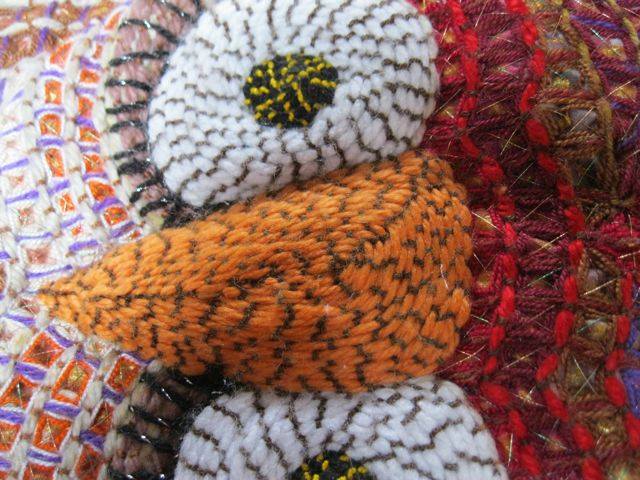
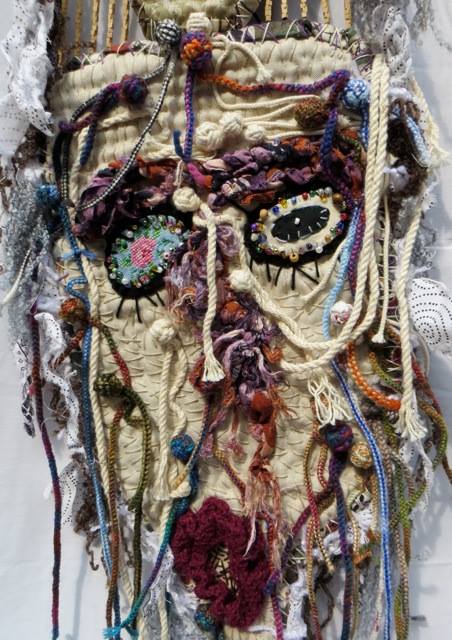
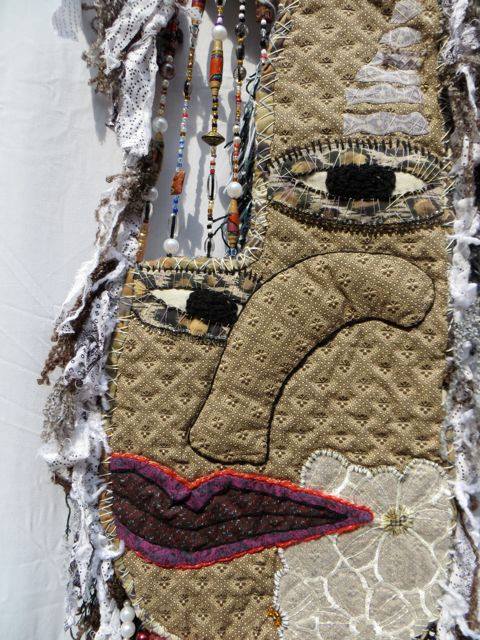
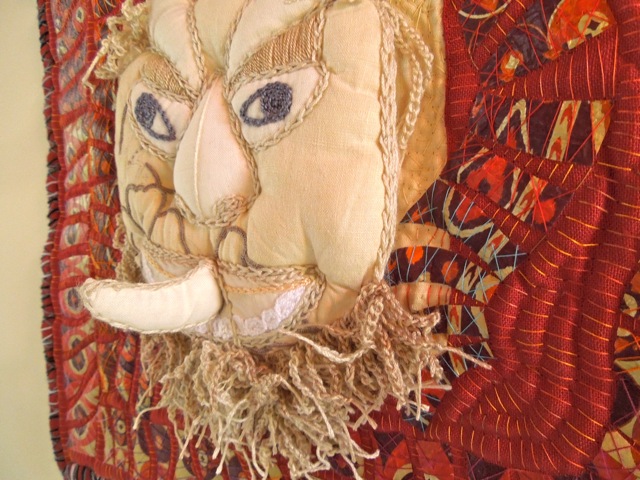
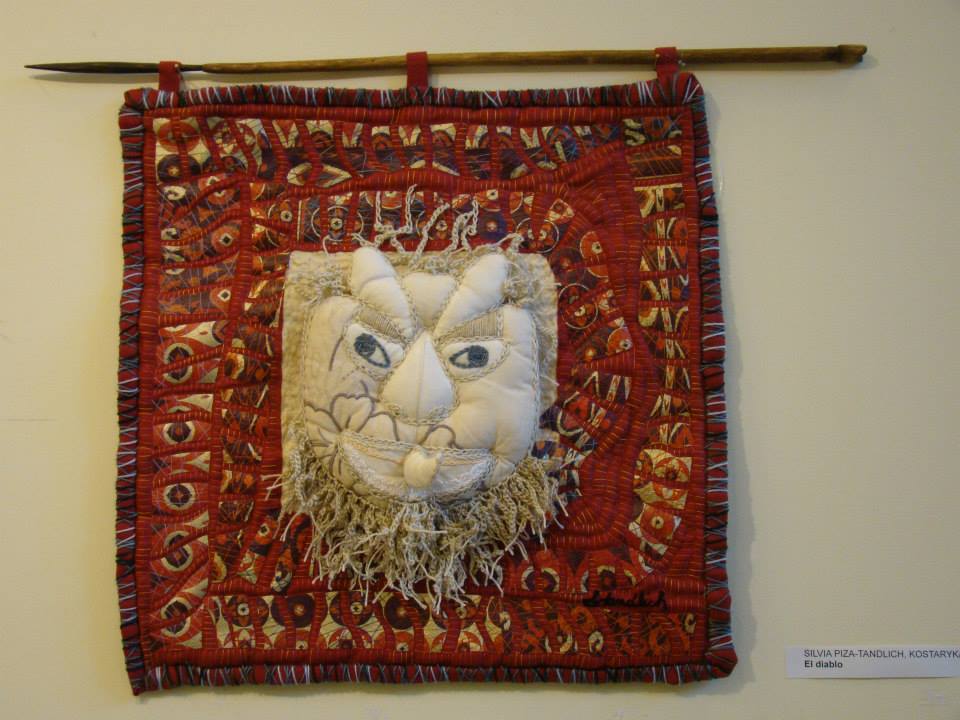
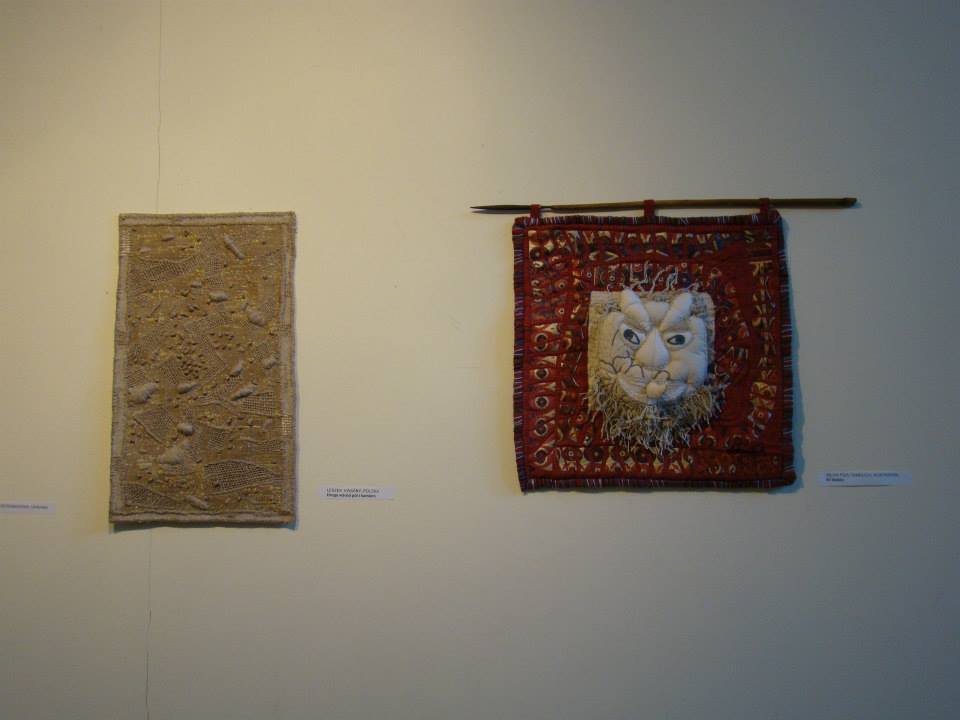
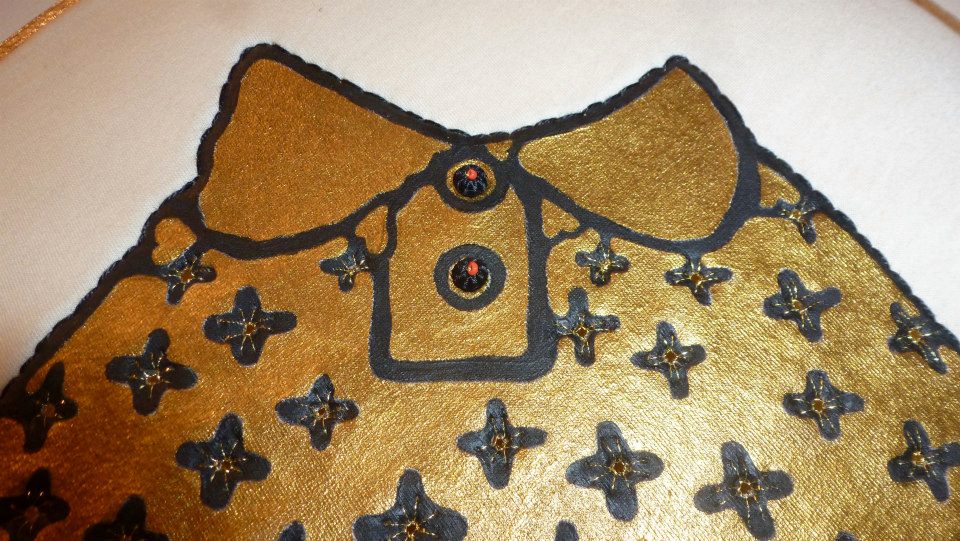
“El diablo“. Hand embroidery, paper appliqué, and quilting. 54 X 40 cm. 2014
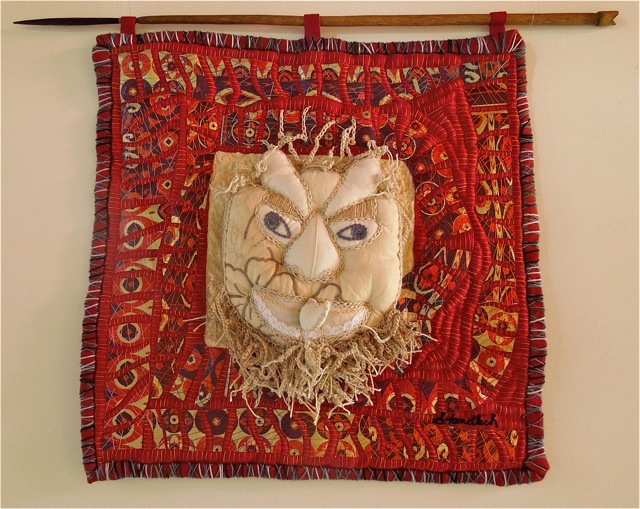
Silvia Piza-Tandlich. El Diablo. 54 X 40 cm
Linen was brought to Costa Rica during the Spanish conquista, and as a child it was very common to watch Mother embroider her tablecloths and napkins. She would give me remnants to entertain myself while she embroidered, and I fantasised by making dolls and puppets—one of which was the devil (“El diablo”), a mask used in the Boruka indigenous culture—all out of imported linen. Thus, the present artwork represents my childhood memories as well as the mestizo tradition still in existence: “El diablo”, which in my case is made with unfinished linen napkins from 55 years ago.
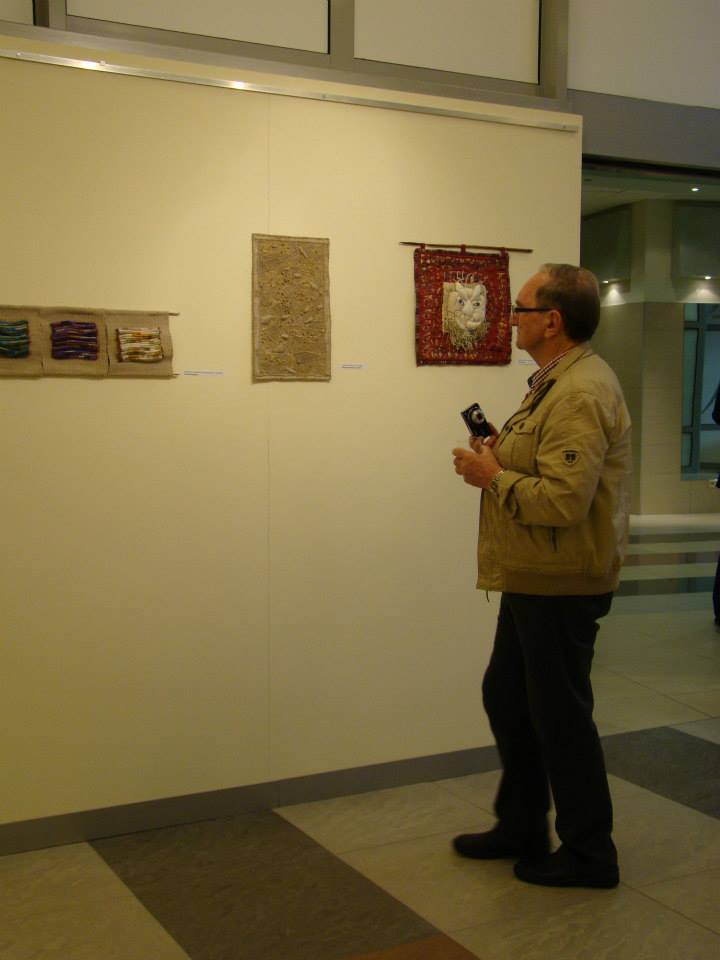
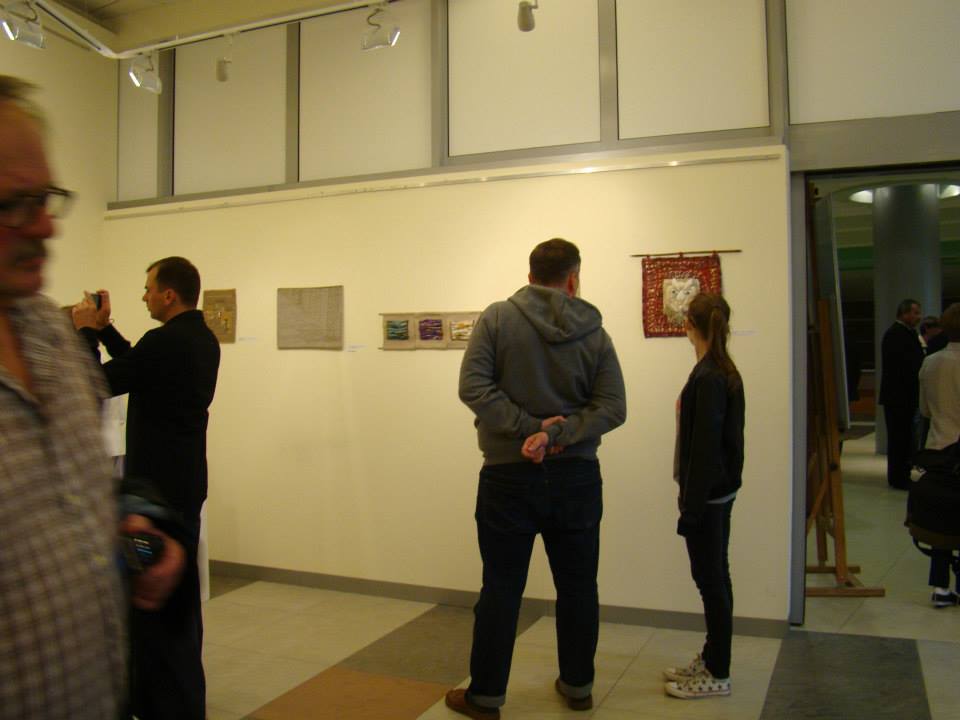
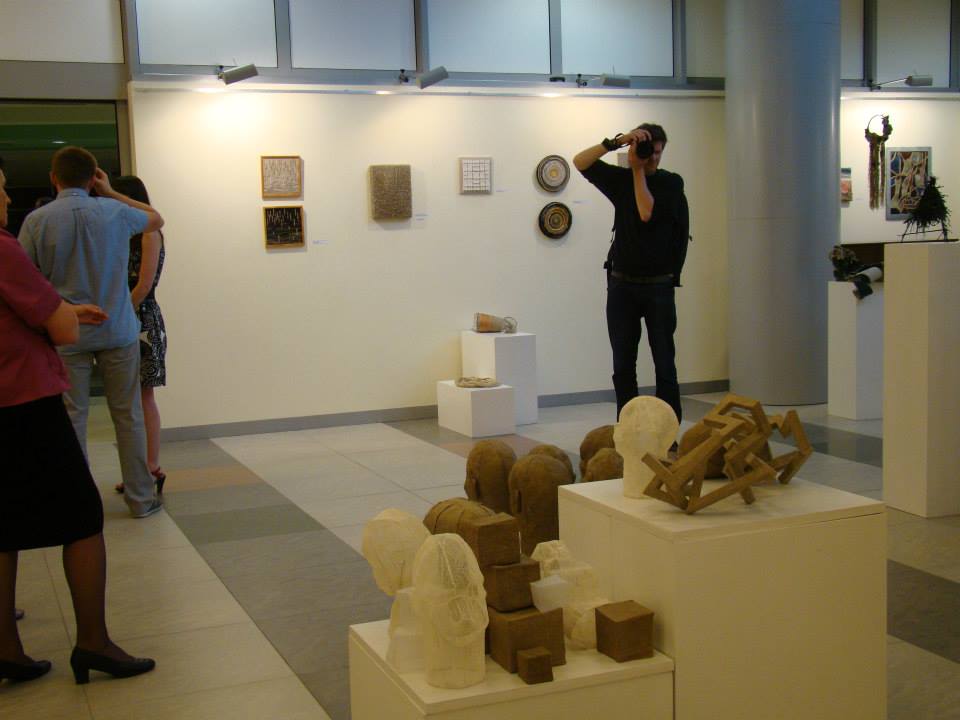
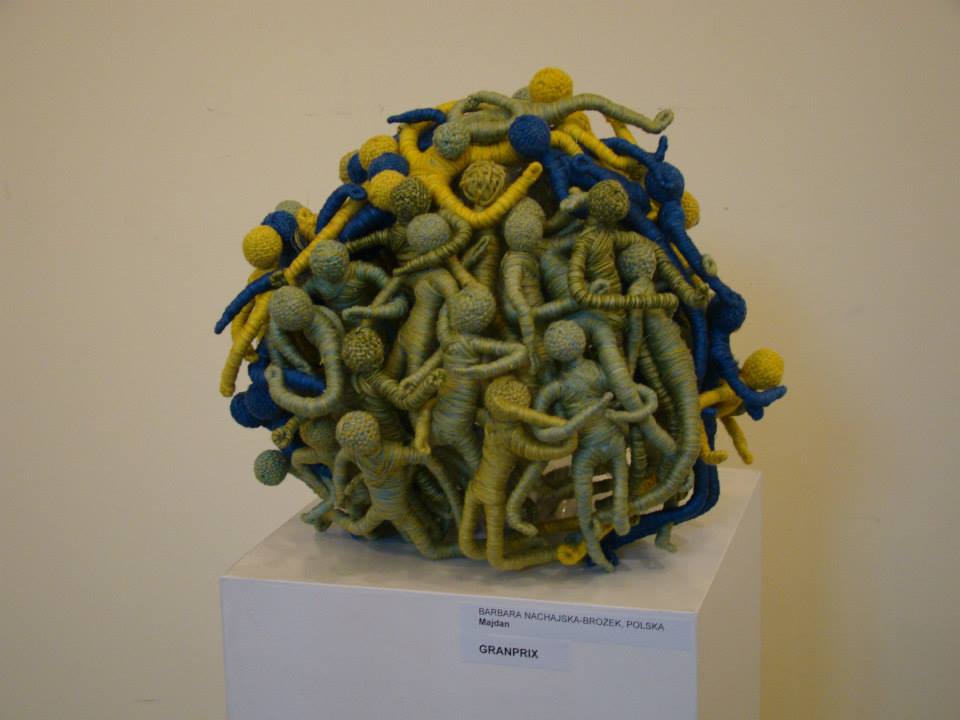
Krosno Grand Prix 2014
Es fascinante poder seguir al menos parte del proceso creativo de toda expresión artística, especialmente si el proceso sucede paralelo a vivencias singulares dentro de un contexto bicultural.
Una tarde en mi galería, entraron padre, madre e hijo —todos de mirada vivaz y cara de inteligentes— y por tratarse de vecinos de la zona, les propuse que formáramos un grupo comunitario de tertulia e intercambio. Así fue como conocí a Frank Brandl y familia.
Para esta nota, vale la pena sacar la cuenta de fechas y edades, ya que el proceso de Frank de reinventarse en varios ámbitos, es un tanto distinto al de un artista en constante experimentación. La diferencia radica en que el artista hace experimentación dentro de su campo, mientras que Frank ejemplifica todo el proceso de absorción humana a un nuevo escenario cultural, además de su ósmosis textil hacia una imprevista contemporaneidad, la cual no encontramos en todas las personas.
Su narrativa inicia con haber nacido en Colonia en la Alemania de los años 1960 y que, a los 17 años, viajara más de 500 kilómetros hasta el puerto de Bremen. Lo que él no expresa es la intensidad de este puerto famoso, que fuera el antiguo puerto Hanseático de más relevancia: cargado del sabor y la rigurosidad característicamente alemanas, con extensa actividad relacionada a funciones marítimas y portuarias, donde el joven entrena nada menos que en el Schulschiff Deutschland —el barco escuela germánico de renombre— cargado de oficiales bastante serios y estrictos, con 25 velas y 1950 metros cuadrados de espacio. Frank fue parte del último grupo de pupilos antes de que el velero pasara a convertirse en museo. Fue allí donde el chico que quería recorrer el mundo, aprendió a hacer nudos.
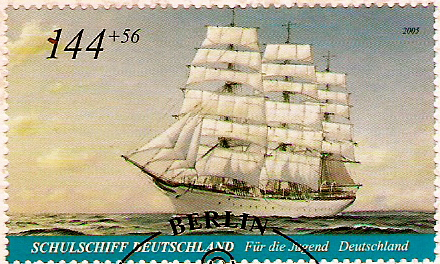
Estampilla que muestra al Schulschiff Deutschland en todo su esplendor.
Desde el punto de vista meramente textil, existe una decena de nudos básicos que nos llega de la época de los Egipcios y otras culturas de navegantes, con cientos de combinaciones de carácter ornamental. Estos nudos eran vitales en las cubiertas de los veleros y de las amarras dependía su navegación. Sin embargo, luego de la II Guerra Mundial, los mecates y amarras naturales se fueron sustituyendo por aparatos, artefactos y artilugios de metal, conforme la tecnología y mecánica del siglo XX fueron avanzando. En tono irónico, Frank cuenta que —“en los barcos fueron eliminando a los marineros alemanes: por cada alemán, ponían a cuatro filipinos, o a cuatro de Tonga. Cuatro eran más baratos que un alemán, por lo cual, el oficio de marinero ofrecía muy poca estabilidad”.
Las amarras tradicionales fueron sustituidas por cabos precortados para embarcaciones más modernas, de manera que los nudos hoy en día son usados primordialmente en deportes que requieran subir o bajar paredones, o en operaciones de rescate vertical por parte de servicios de emergencia.
Finalizado su riguroso e inusual entrenamiento, Frank trabajó de marinero mecánico hasta 1992, año en que decidió establecerse en Costa Rica con su esposa, Patricia. A partir de ese momento, los recuerdos de su vida marítima quedan plasmados sobre el oleaje de su memoria, con muy pocas excepciones tangibles: todavía conserva la medalla al honor del Servicio Marítimo Alemán de Búsqueda y Rescate (Deutsche Gesellschaft zur Rettung Schiffbrüchiger), que recibiera por salvar a los tripulantes de un barco por hundirse.
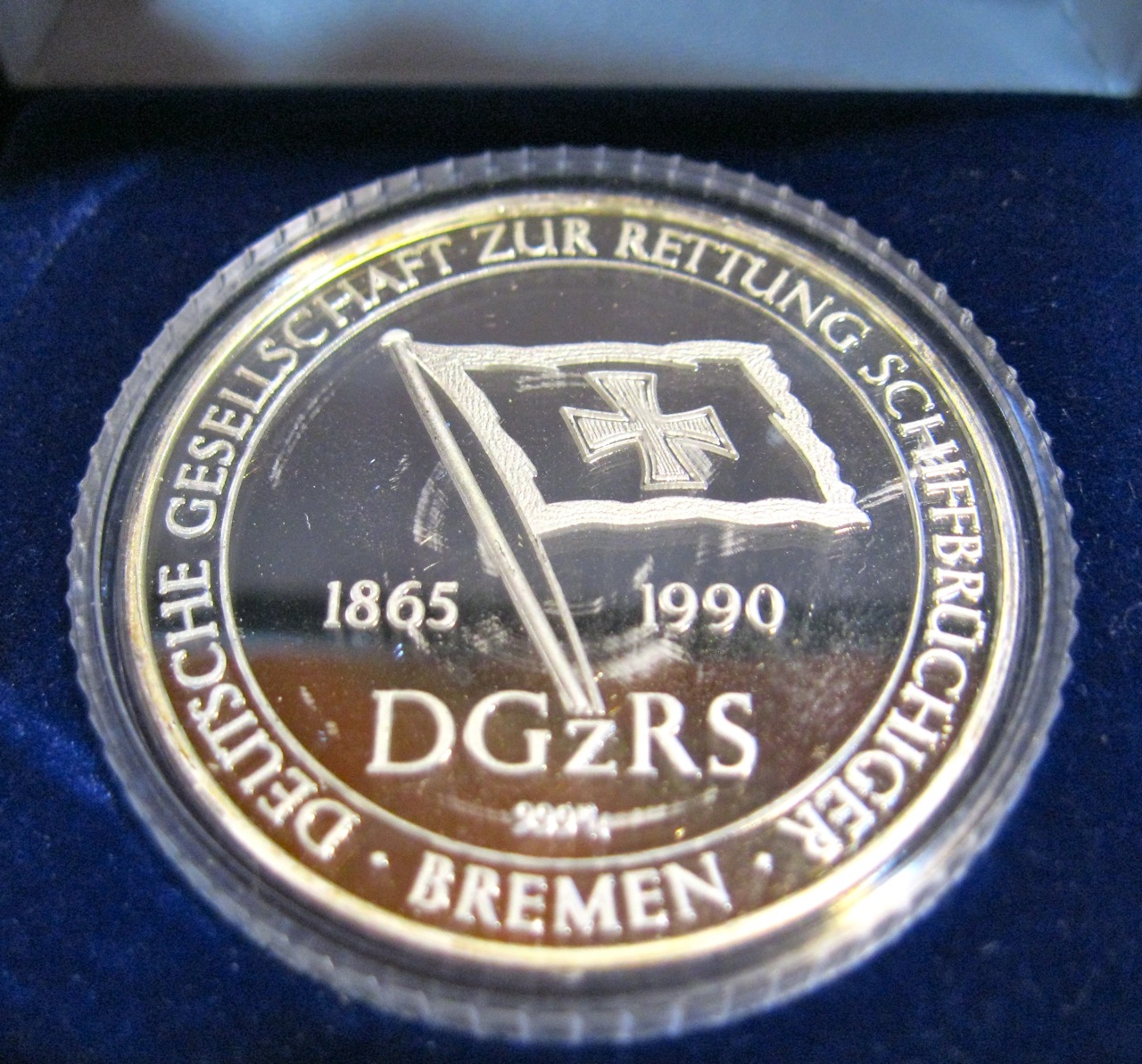
Medalla del Deutsche Gesellschaft zur Rettung Schiffbrüchiger.
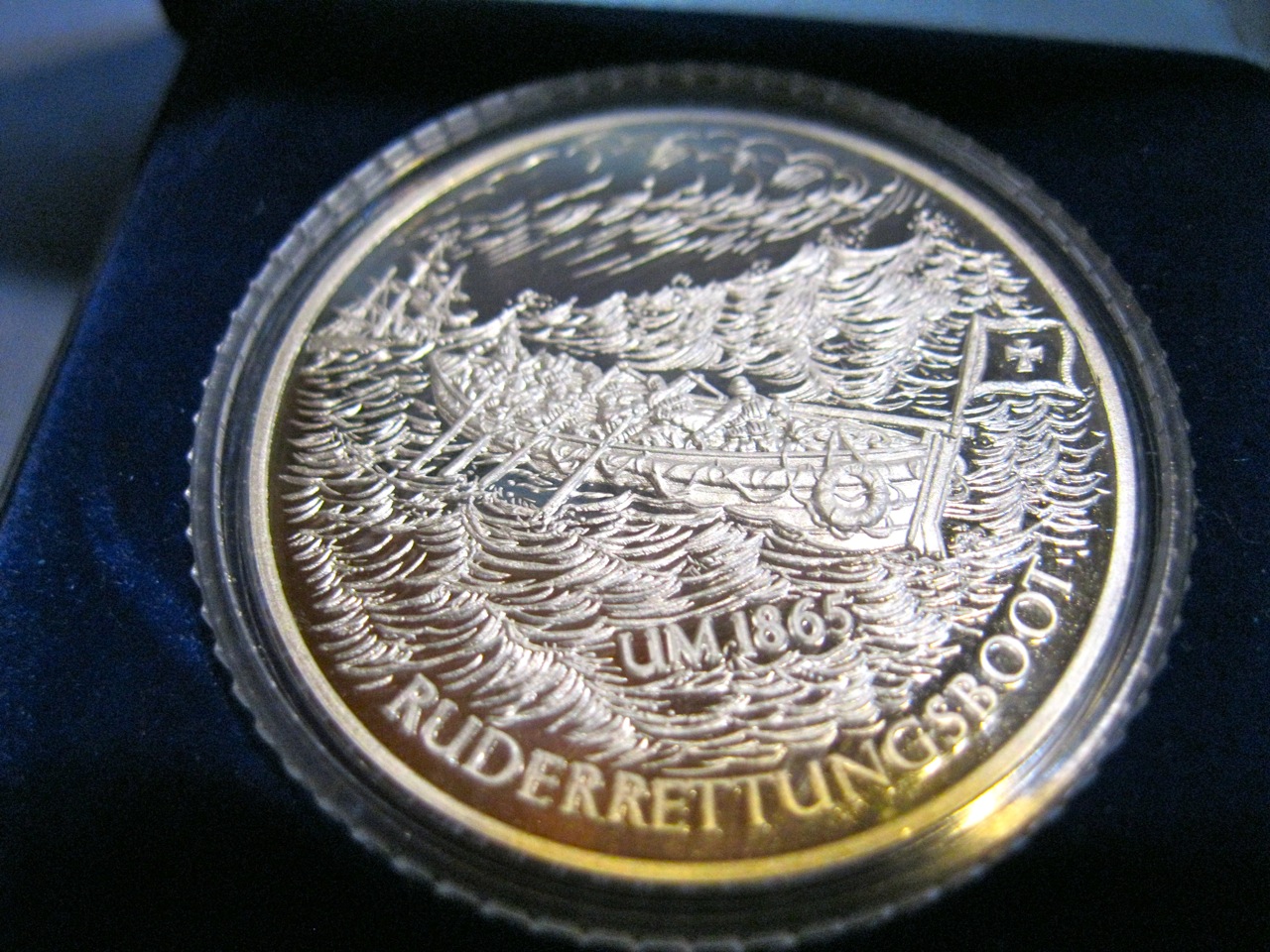
Revés: Medalla del Deutsche Gesellschaft zur Rettung Schiffbrüchiger.
Como vecinos que somos, a menudo él, su familia y la suscrita hemos conversado sobre el cambio tan radical que experimentó Frank al permanecer en tierra firme. También hago referencia a que muchos artistas nos vemos en la necesidad de reacomodar nuestra creación de acuerdo a los requerimientos que tengamos por delante. Escucho mi voz haciendo la pregunta obvia: —“En tu caso, ¿tuviste que reinventarte a qué?” —“¡A nada!” responde sonriendo el entrevistado. Una vez en tierra, su sustento y el de su familia tomarían un lugar prioritario en su nueva vida, de manera que pasarían 16 años sin que él tuviera ocasión de atar cabos.
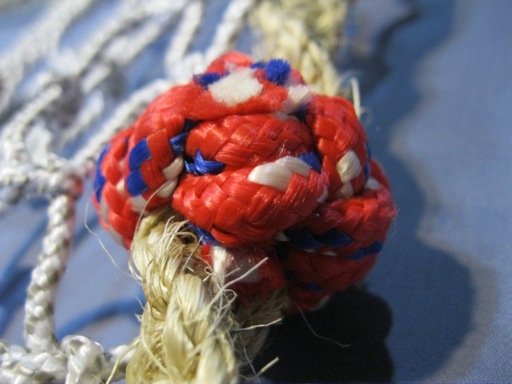 Sin embargo, “lo que bien se aprende, nunca se olvida”, dice el dicho. Y Frank agrega: —“¡también me quedó mi manual de nudos!”
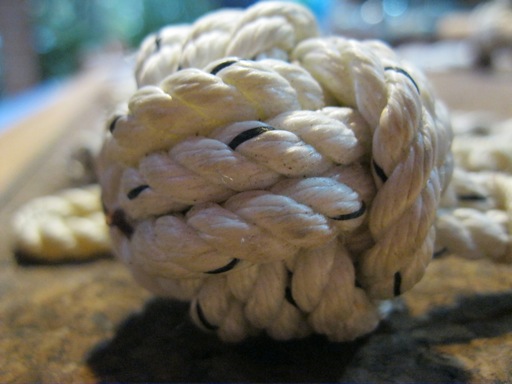
El tradicional nudo “puño de mono”, utilizado para atar el barco al muelle.
Luego de 16 años en su nueva vida en Costa Rica, le entraron ganas de hacer veleros completos dentro de botellas, tal y como había leído en literatura, pero pasaría un rato más antes de tener la ocurrencia de hacer un macetero en técnica de macramé, para regalárselo a una pariente.
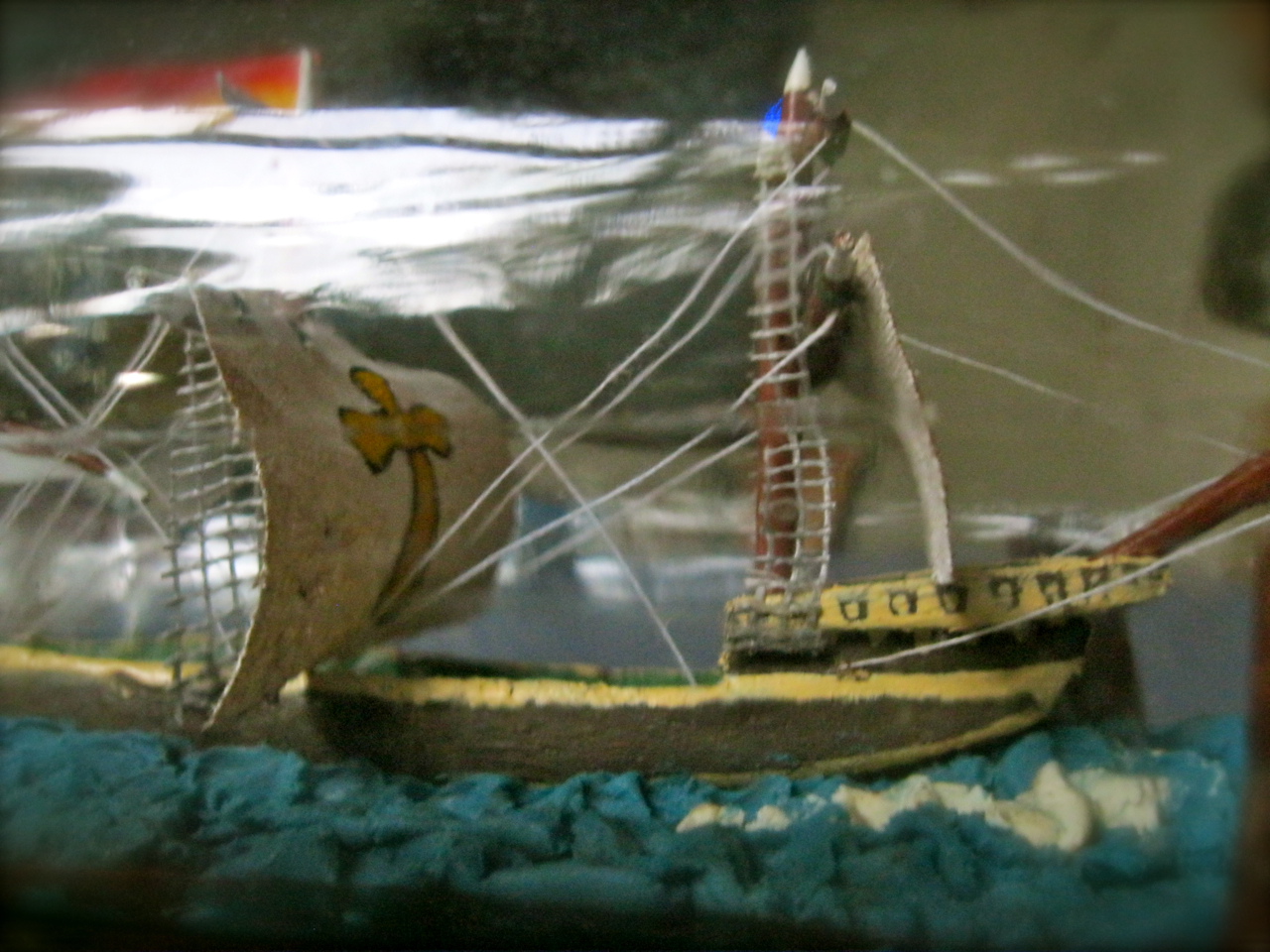
Frank Brandl. Velero en botella.
Este retorno al mundo de los nudos fue considerado algo práctico, sin pretender más mérito que la canasta en sí, con el valor utilitario correspondiente. Sin embargo, algún encanto debe haber quedado en la mente del creador pues, sonriente, accedió a hacer un marco, dentro del cual colocaríamos una pequeña quilt hecha a mano por su esposa. El resultado fue tan impresionante, que de inmediato procedí a pedirle que hiciera otro marco y esta vez, le colocara solo nudajes que representaran algo de lo que sabe hacer.
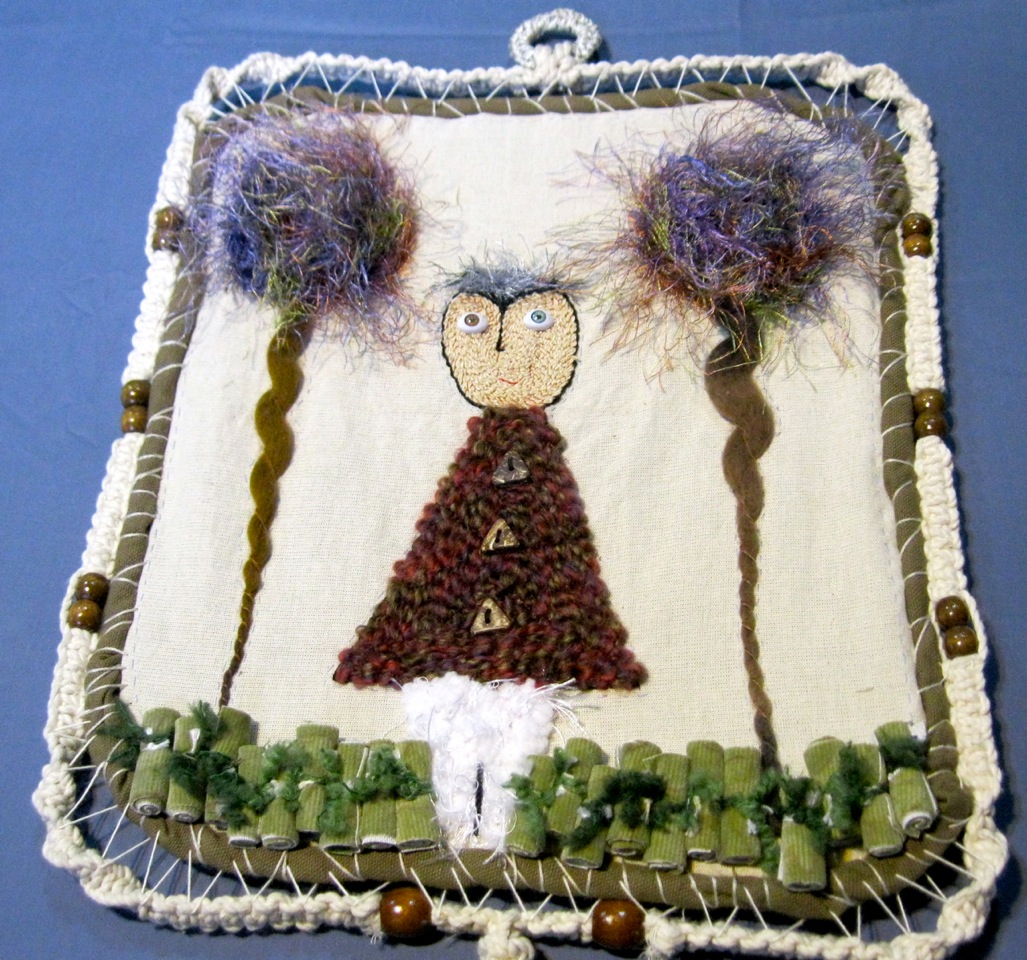
Marco hecho por Frank, and quilt hecha a mano por Patricia.
De inmediato topó con escasez y mala calidad de materiales que podrían usarse para atar cabos, lo mismo que algunas herramientas básicas para aumentar la tirantez de ciertos nudos, los cuales tradicionalmente no pueden ser fácilmente soltados. El siguiente paso creativo era de esperarse: buscar mecates y cuerdas, con miras a explorar posibilidades en cuanto a color, forma y textura, para luego agregar una tercera dimensión a sus creaciones. Todo esto como un proceso natural, de sentido común y sin más dirección que mi apoyo entusiasta.
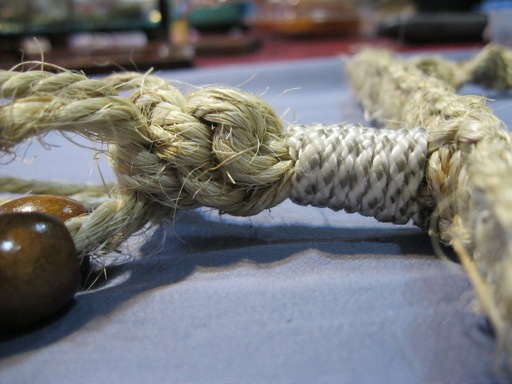
Ejemplo de la minuciosidad de los nudos empleados en los veleros: ahora empleados en el marco de una obra.
La rigurosidad y disciplina del entrenamiento de Frank, valen por una carrera en la “Universidad de la Vida”, mientras que lo demás proviene —como le sucede a todo artista— de su corazón, su mente y sus manos. Sin embargo, para mí es fascinante constatar que el poder de creación podrá ser afectado y hasta moldeado por circunstancias externas, pero una vez que aflora y toma fuerza, sus posibilidades no tienen límite.
Fotos 9, 10 y 11: Primer trabajo artístico terminado:
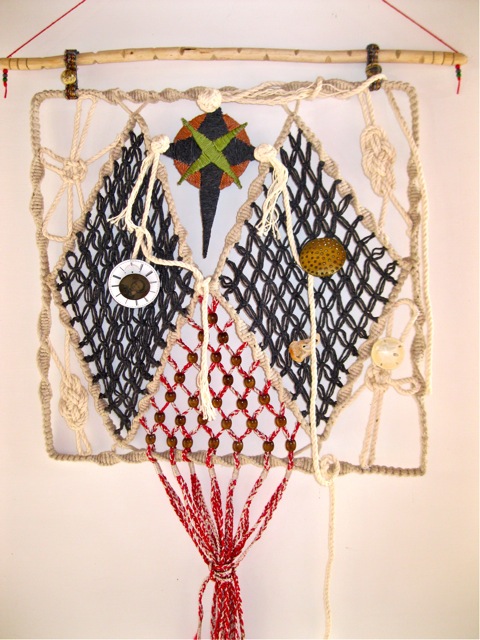
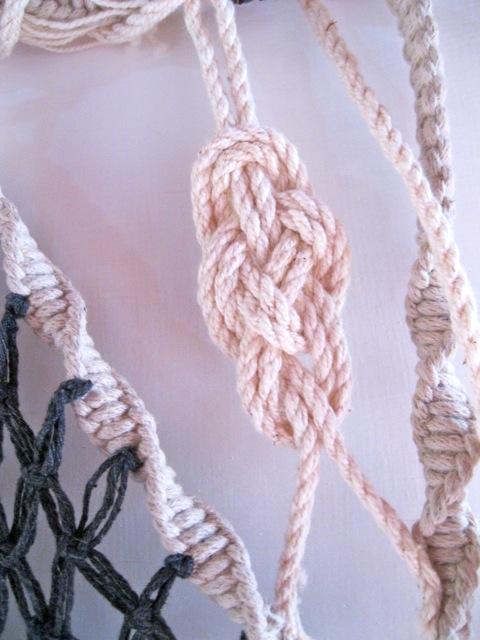
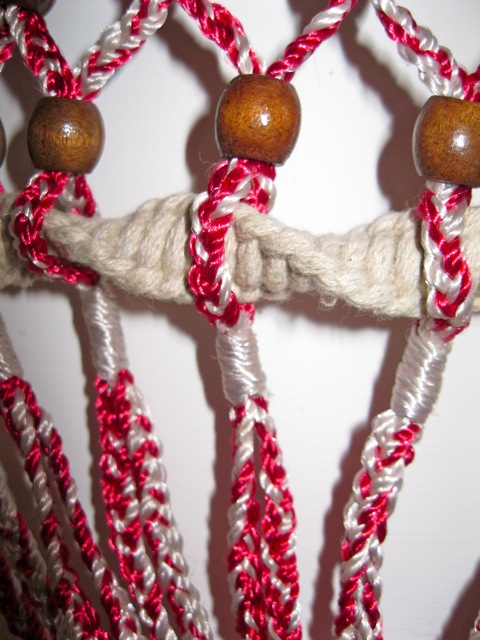
Ejemplo de la minuciosidad de los nudos empleados en los veleros: ahora empleados en el marco de una obra.
No podría finalizar esta nota, sin recordar las elocuentes palabras de Yves Michaud:
“¿Enseñar el arte? Retomar el hilo de la vida cualesquiera sean los medios”. Es así como Yves Michaud, Director de la Escuela de Bellas Artes de Paris, definía en 1993 la extrema necesidad a la cual deben responder hoy las escuelas de arte…
“Pienso que el arte es una cosa demasiado seria para dejársela únicamente a los estetas, que no está hecho únicamente para mostrarse en los salones, sino que cuenta en nuestras vidas de una manera mucho más esencial”. “Lo que me interesa es encontrar la respuesta a esta pregunta: ‘¿Cómo se da que la gente tenga un deseo de arte?’ Y creo que las condiciones de esta respuesta encuentran sus raíces en lo real; una realidad que no es solo social sino también pulsional e instintiva… Me gustaría que se pudiera expresar un verdadero deseo de arte: es decir, que la gente buscara crear en su propia vida, sin querer necesariamente exponer en un museo, de una manera totalmente lúdica.
La figura del artista contemporáneo mezcla muchas imágenes de artista: el creador tipo siglo XIX, el artesano, el ingeniero, el chaman, el filósofo (Duchamp: mago, timador, filósofo…) etc. Otros están aún por llegar, con la intervención cada vez mayor de la industria cultural, que no pienso, contrariamente a un extendido a priori, que serán necesariamente “malos”. Con los nuevos lenguajes, tendremos seguramente artistas ingenieros, a la vez más juguetones y más profesionales —como se ve ya con el vídeo— que darán vuelta a la jerarquía de los valores del Gran Arte…
Yo creo que hay motivaciones verdaderas y falsas, y que el rol de la escuela es el de desarrollar y mantener motivaciones verdaderas. Por falsas motivaciones entiendo las motivaciones simuladas, es decir, que toman un modelo, tal como las escuelas fundadas en la transmisión las han vehiculado. Más que transmitir modelos, o ‘valores’, debemos ayudar a los estudiantes a encontrar su propia identidad”.
Extractado de un reportaje de la revista “Connaisance des Arts”, en 1993: Enseigner l’art?: Analyses et reflexions sur les ecoles d’art (Rayon art) (French Edition). Yves Michaud (1993).
—Silvia Piza-Tandlich
ARTICLE WRITTEN BY MARTA IRENE ARANCIO, AND TRANSLATED INTO ENGLISH BY SILVIA PIZA-TANDLICH.
 For over 27 years I anxiously awaited a chance to visit this peculiar area in Panama: The KUNA YALA territory.
  A small plane had the thirty minute task of taking me along with four other passengers, from Panama City’s Gelabert de Albrook airport, to El Porvenir Island in the San Blas Archipelago on the Atlantic side of Panama.

Lodging hall at San Blas Archipelago.

Laurie’s kindness allowed me to be met by Eric at the El Porvenir Island airport.


The great bohío huts are always clean, with clothes and hammocks hanging, showing only cooking utensils on the floor, a few toys, the stove…

Typical sewing basket.
Some baskets for threads, needles, scissors, fabric remnants and some mola in progress are also visible inside dwellings.

 The mola is a precious rectangle intended to become part of a blouse, in which case two identical molas are used—using the same design and color scheme, one in front and one in back. The blouse is made with gauze-like, flowery fabrics. The attire is complete with a wraparound skirt, and a kerchief to protect their head from the sun. At this point I must describe the multi-color group of elements presented as a characteristic unit, each element with its own function and with amazing profusion of color.
 The mola, handmade piece which is fundamental for the blouse, could gather no less than five or six colors simultaneously, reverse-appliquéd in successive layers that are articulated thanks to careful assemblage, meticulous hand sewing, and care from the point of view of chosen design. The motifs could be geometrical (generally ancestral, whose meanings escaped me in such a short time although they’re frequently used); animals and flowers; and motifs having to do with contemporary references such as logos, numbers, cigarette brands, or any image they pick up during their exchange with tourists.


“Atlas beer” reads the legend on this mola (and “beer” is misspelled)
The flowery fabrics complementing blouses, could match prevailing mola colors much like complementary hues. Cotton wraparounds are usually two-toned—black or blue background—with green or yellow motifs. And the head scarf is red or yellow.

Woman showing leg Winis design.
The attire is completed with winis, which are glass beaded ornaments on feet and arms, with two or three colors and in many cases, showing frets or linked geometric designs.

Smiling woman offering mola for sale.
Young women’s almost permanent smiles were a stark difference from the gruffness of older women during the time it took to study me since like so many curious visitors, I wouldn’t want only what was being offered for sale, but seemed to always be observing them.
They exchanged comments, opinions, smiles, maybe criticism…all is possible when one doesn’t understand or speak their Kunan-Chibché language few visitors could learn. Some sort of complicity or naughtiness shows in their faces and leaves us at their expense: they’re owners of their land, culture and language, which allows them to be cordial and invite us to their table.

Noni fruit has medicinal and cosmetic properties.
The first day with Eric we went to another island where fruit trees could be seen, which are strong in Kuna diet and health care—such as noni fruit.

Meal at San Blas Archipelago.
Although fish is a strong element in Kuna diet, I was offered plantain, yuca (cassava) or mandioca (tapioca), and a small and powerful grilled pepper. Before and after this small banquet we visited their homes under the ardent sun, and got to see their prolific mola production. Today I can share their faces, feet, works, smiles, games, and a “private mola exhibit” thanks to their cordiality, and despite a certain mistrust…in the sand in front of the sea.
 I sincerely thank Laurie Bjorjlund Lahey for connecting me to the people of San Blas, and allowing my dream to become a reality.
Marta en route to San Blas.
—Marta Irene Arancio, textile artist & ceramist, Argentina
Contact:
<martarancio@gmail.com> Phone: +54 387 4395274
——————————————————————————

Kuna woman photographed by Marta Arancio.
MORE INFORMATION ABOUT THIS AREA:
The San Blas Islands of Panama is an archipelago comprising approximately 378 islands and cays, of which only 49 are inhabited. They lay off the north coast of the Isthmus, east of the Panama Canal. Home to the Kuna Indians, they are a part of the comarca Kuna Yala along the Caribbean coast of Panama. The inhabitants used to wear few clothes and decorated their bodies with colorful designs. When encouraged to wear clothes by the missionaries, they followed their body painting designs in their Molas, which they wore as clothing. The Kuna Indians worship a god named Erragon. They believe that this god came and died just for the Kuna people. The Kuna Indians were driven off Panama during the Spanish invasion and they fled in their boats to the 378 islands around. The chief of all the islands lives on an island called Acuadup, which means rock island. The Kuna are hunters and fishers, they are a very clean people and on some of the islands have opportunities to attend school. Most of the men now speak Spanish, though the women carry on older traditions. —Silvia Piza-Tandlich
Arancio article
—Silvia Piza-Tandlich
Arancio article
I translated into English and Spanish since I think the entire world should be aware of the torture imposed upon African women slaves in Brazil, modern mistreatment of black women in many places, and in Argentina the feminist art expressions due to dictatorships, torture, and disappearances.
One thing the article doesn’t explain, is the scope of the punishment by having to wear the gag or Flanders tinplate mask:
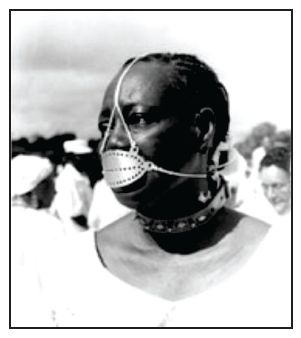
Black woman wearing torture instrument, Flanders tinplate gag
it had a metal pin that actually went inside the woman’s mouth to press down on her tongue. Some female slaves died from metal poisoning…
—Silvia Piza-Tandlich
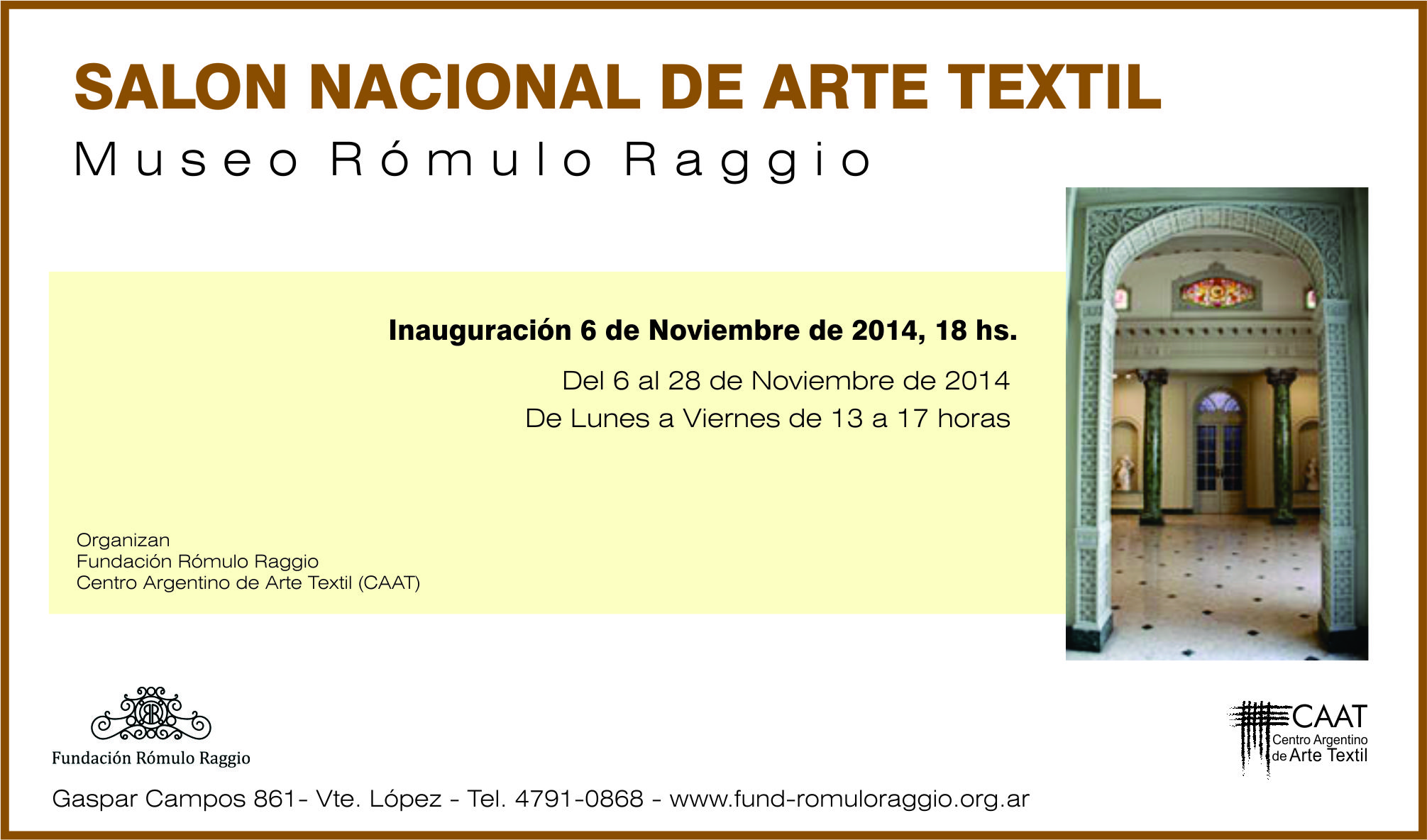
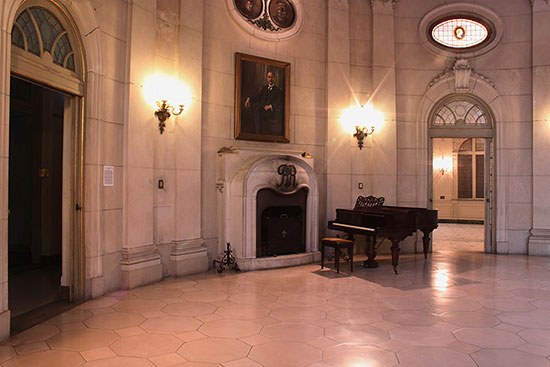 Every year, the Argentine Center for Textile Arts (CAAT) in Buenos Aires, curates and sponsors a national competition, which is also presented at the Rómulo Raggio Museum.
I remember my excitement at being selected in 2008, thanks to the help of friends who paid my entry fee in local currency. As a foreign participant, this was the only way to be considered in this prestigious competition.
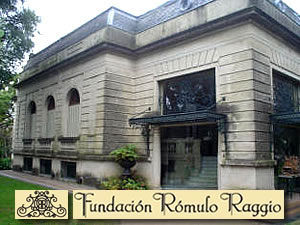 The museum is a stately jewel—elegance indoors, and fragrant beauty on the outside, where its Foundation holds artistic activities on a monthly basis.
This year’s exhibit was open to the public for most of November. We hope to see photographs of the entire selection of works, which represents the latest edition of contemporary textiles in Argentina.
This year’s First Prize National Salon for Textile Art 2014 went to Claudia Contreras for her”National Bank for Genetic Data”. 2010. Acrylic paint over cotton, gold thread, silk embellishments, perforated, hand embroidered, framed.
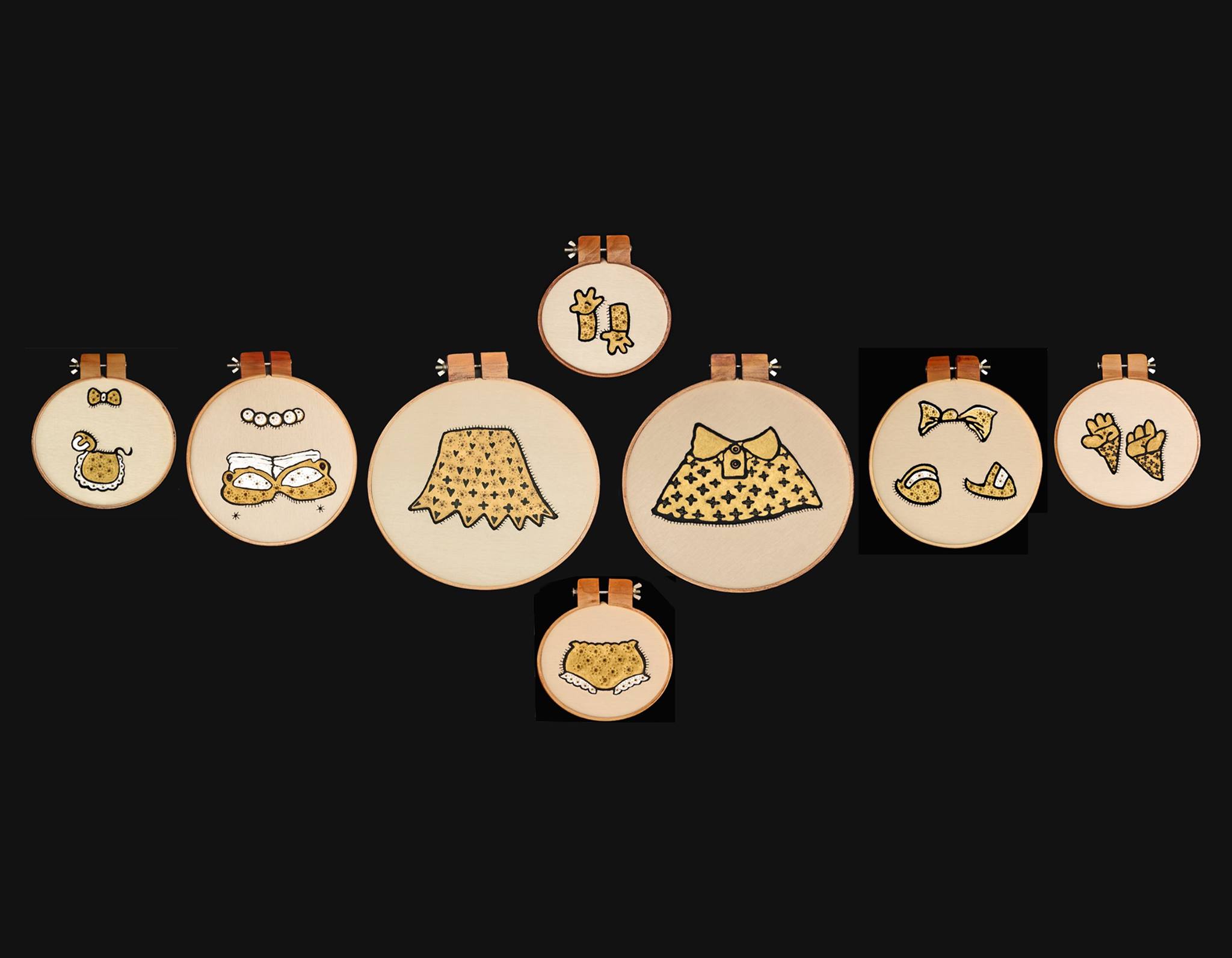
Claudia Contreras. “National Bank for Genetic Data”.
For information about the artist, you may refer to her Website as well as her interview in Leedor.com magazine:
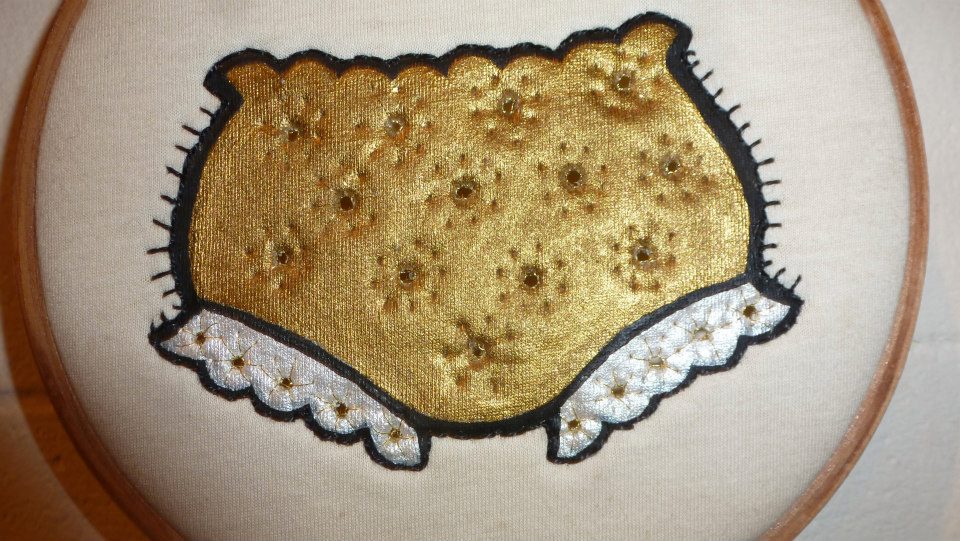
Claudia Contreras. “National Bank for Genetic Data”. detail
http://www.claudiacontreras.com.ar/
It is also my pleasure to congratulate Dina Resca, whose work I have shown here in the past: Dina is the recipient of the Third Honorary Mention for her work, “Chrysalis II,” accompanied by its customary poetic referent.
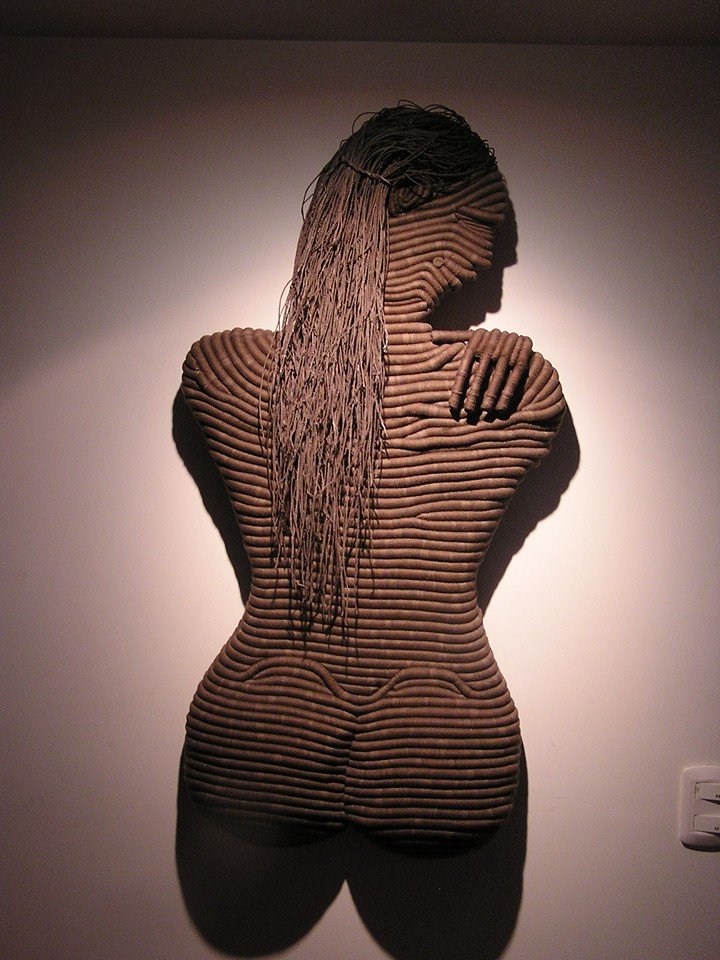 Chrysalis II
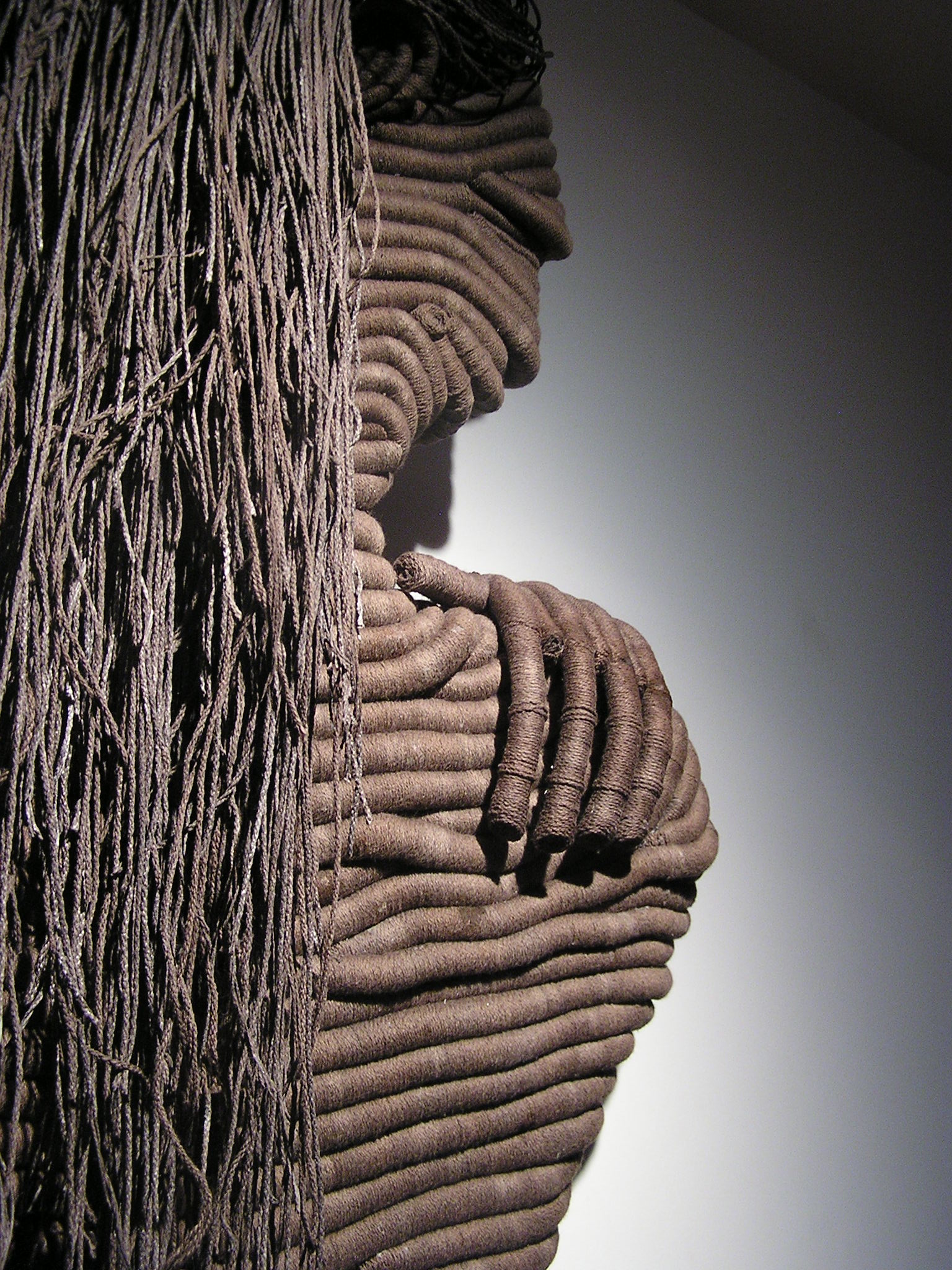 Copy my hands in your eyes!
Your half-open mouth to the pen
In candid caress my caress.
Silently cure
The horror of a motionless body
Turn and face life…
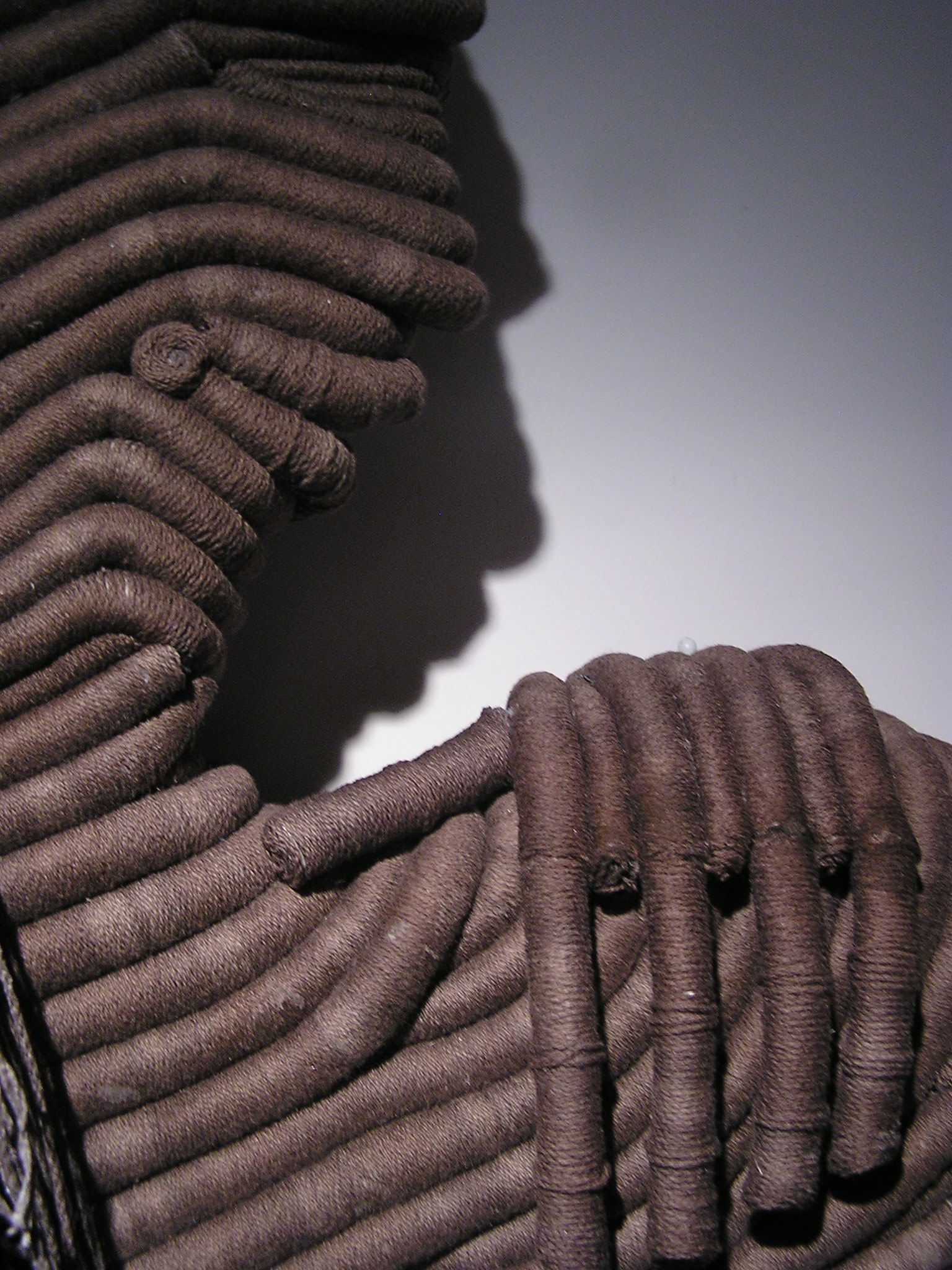 Show your moving curves
Like a bowl that holds
Like a nest being inhabited.
There you will place upon me, for you
Your back of longed-for sweet nothings.
Copy. Turn around
Pose for me
Be my insurgent.
That within my threads I sealed my crevices
Wrapping, and each one
With the tenderness of feeling you mine
Although in reality, you were not.
—Dina Resca
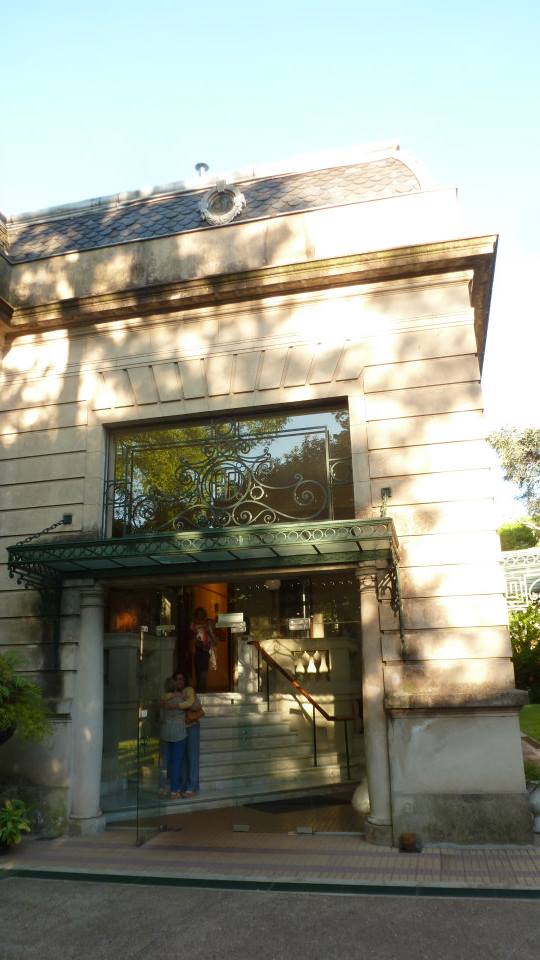 If you’re in Buenos Aires and would like to visit the Raggio Museum, you can contact
http://www.fund-romuloraggio.org.ar/centro.html
—Silvia Piza-Tandlich
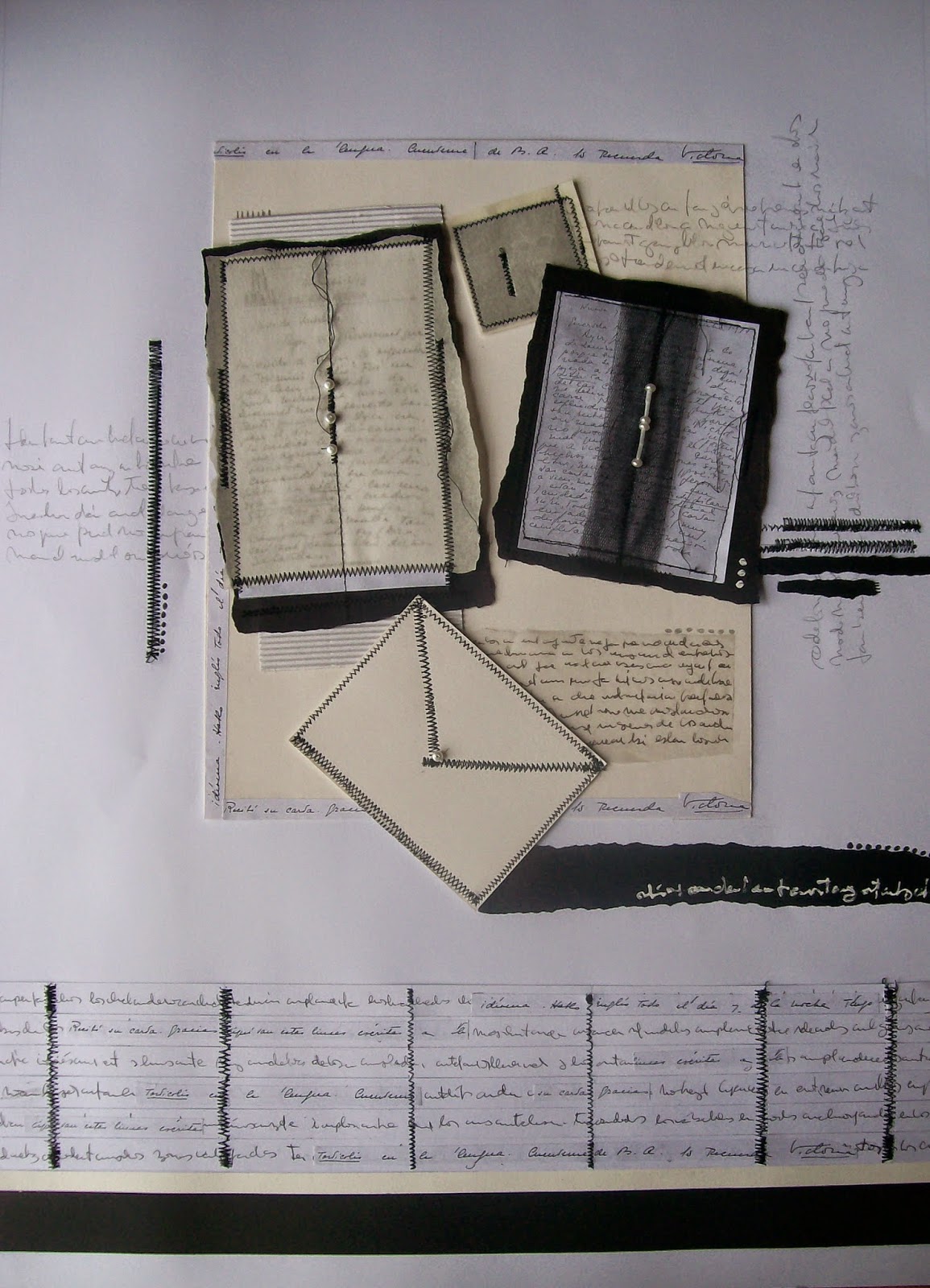
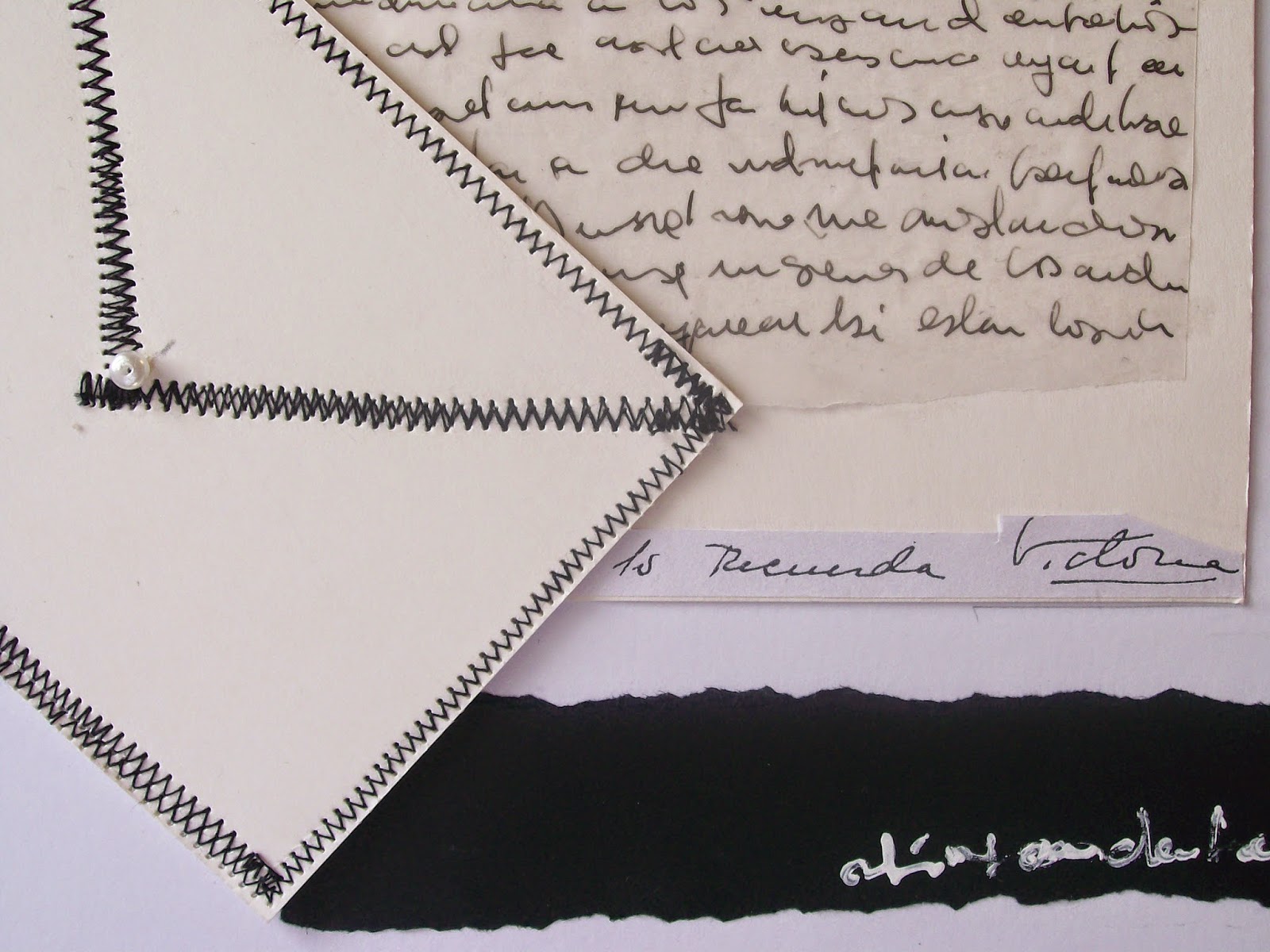
LETTERS BY VICTORIA OCAMPO II
73 X 53 cm. Papers, fantasy stones, cloth, thread and ink.
 http://miriammidley.blogspot.com.ar/
—Silvia Piza-Tandlich
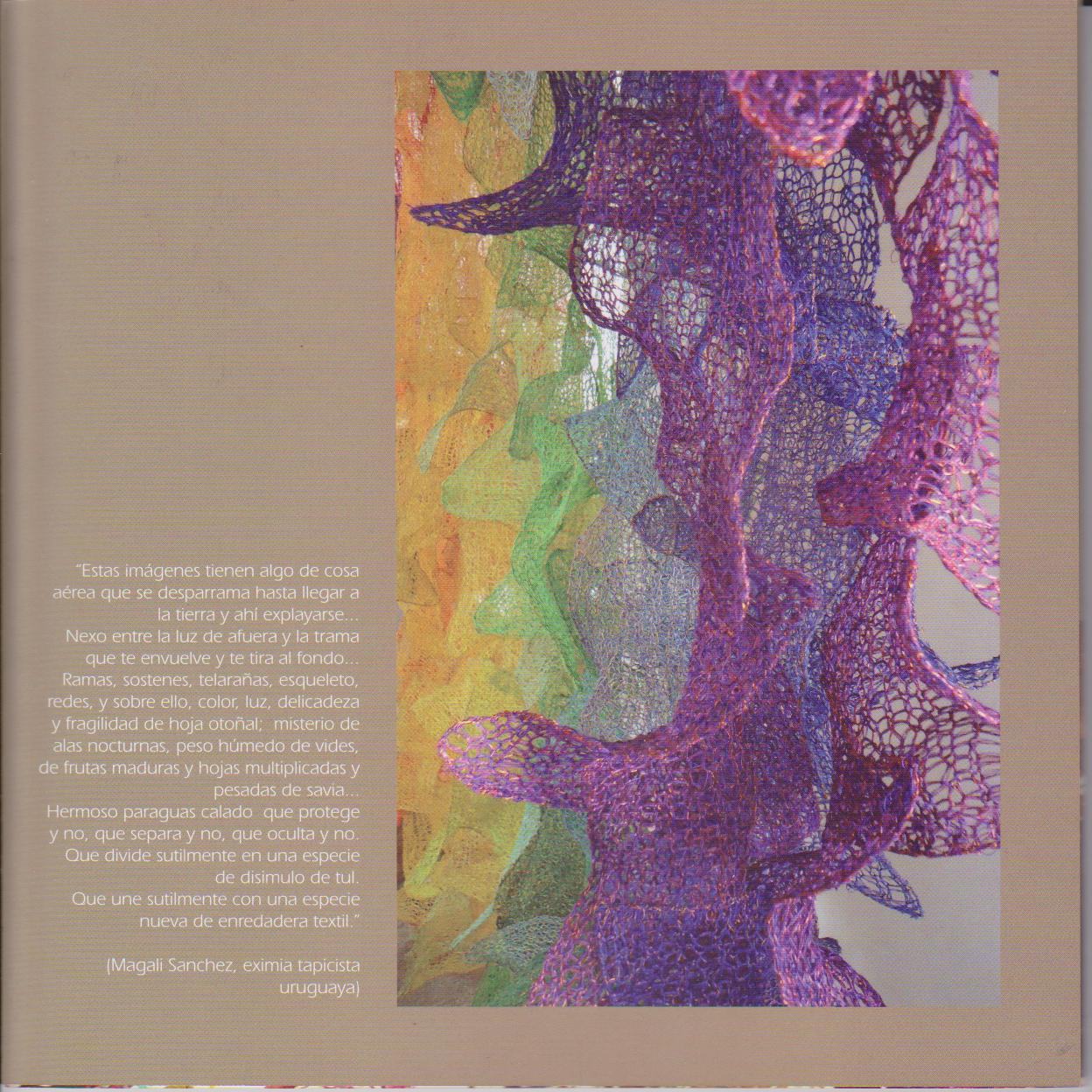
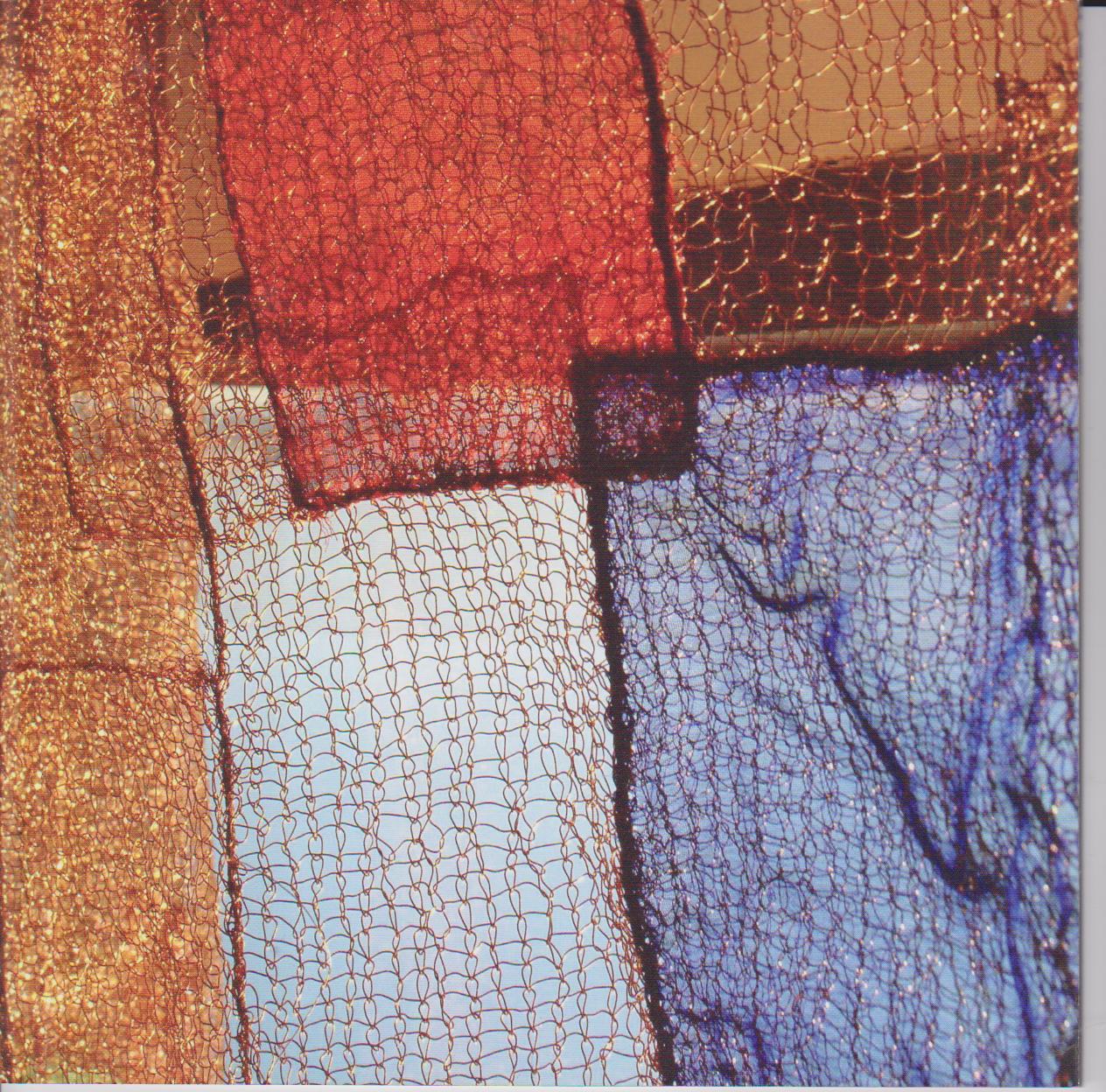 Cochabamba, Bolivia. — Simón I. Patiño Foundation is presenting a comprehensive exhibit by Uruguay-born artist, Beatriz Oggero until October 26, 2014. The elegant venue, Portales Palace Exhibition Center in Cochabamba, Bolivia where this event is taking place, currently displays a beautiful garden outdoors, and a garden of colorful and delicate textile works inside.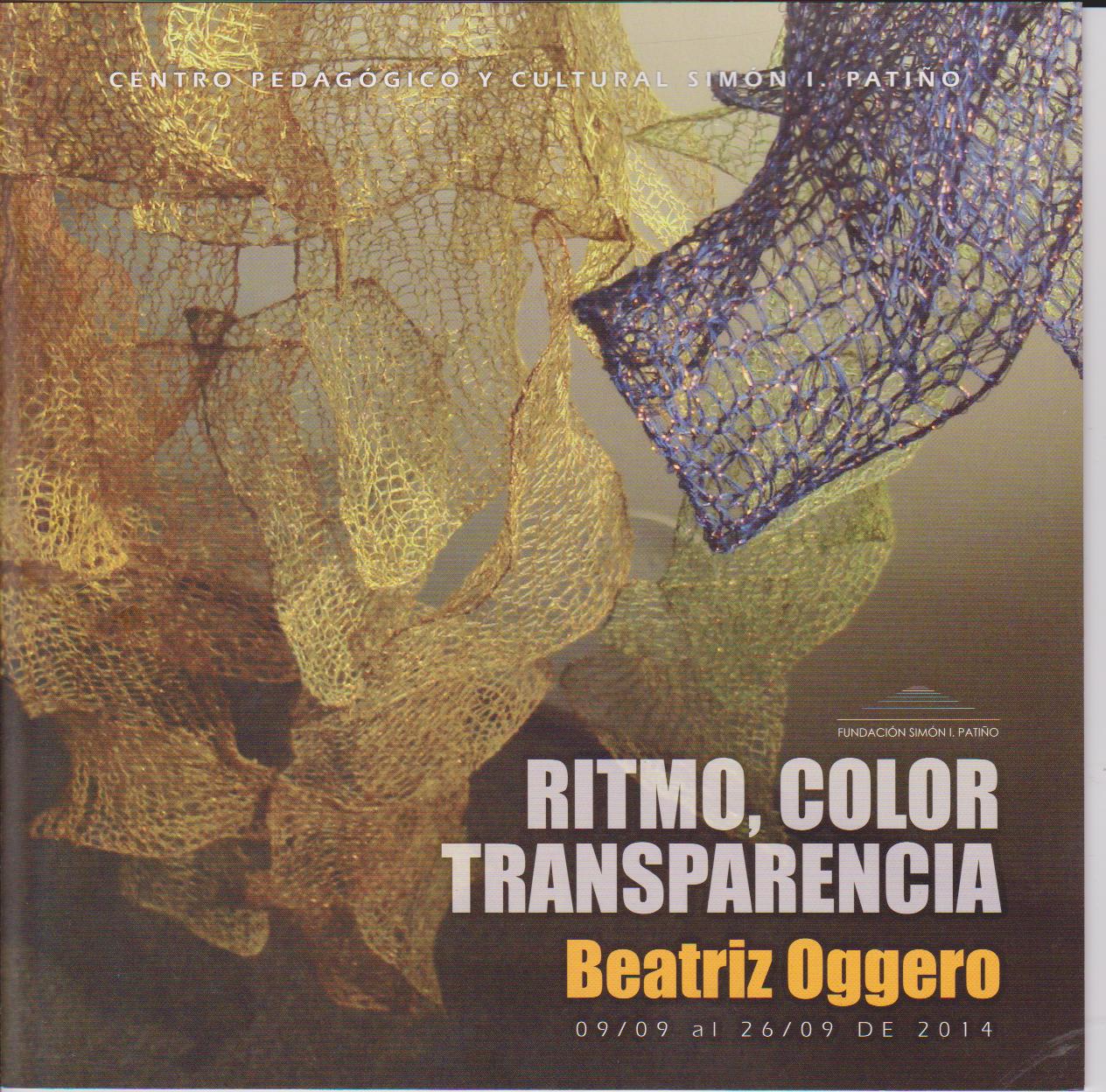
Beatriz was director of CETU Textile Center in Uruguay, and has had multiple exhibitions in many countries. She studied weaving with Maestro Ernesto Aroztegui in Montevideo, and later started working in sprang and tricot technique on her own. Says she:
 One of my works, ‘Color Transparencies,’ was selected to participate in the 6th WTA Biennial: AIR 2011 in Mexico. Now I changed its name, because since then it has grown width and lengthwise in shadows and colors… —Beatriz Oggero.”

Palacio Portales Exhibition Center in Cochabamba, Bolivia
Within world events related to textile art, biennial shows normally introduce new tendencies and techniques to this vanguard art and, thus, choosing participants is done by way of a strict qualifying jury. Although it is regrettable that many biennales have had to permanently shut their doors due to lack of funds and political apathy for artistic and cultural events, the second edition of CONTEXTILE in Guimarães, Portugal started this month with the city municipal promise to support all side activities surrounding the main international show.
Therefore, from 26 July through 11 October, Costa Rica will be one of the participating countries in CONTEXTILE 2014, with the presence of two great artists: Alessandra Sequeira and Silvia Piza-Tandlich. Sequeira is a visual artist and participates with her new passion: hand painted silk, representing a first success within fierce competition since she is one of the 50 artists who were chosen out of several hundred proposals.
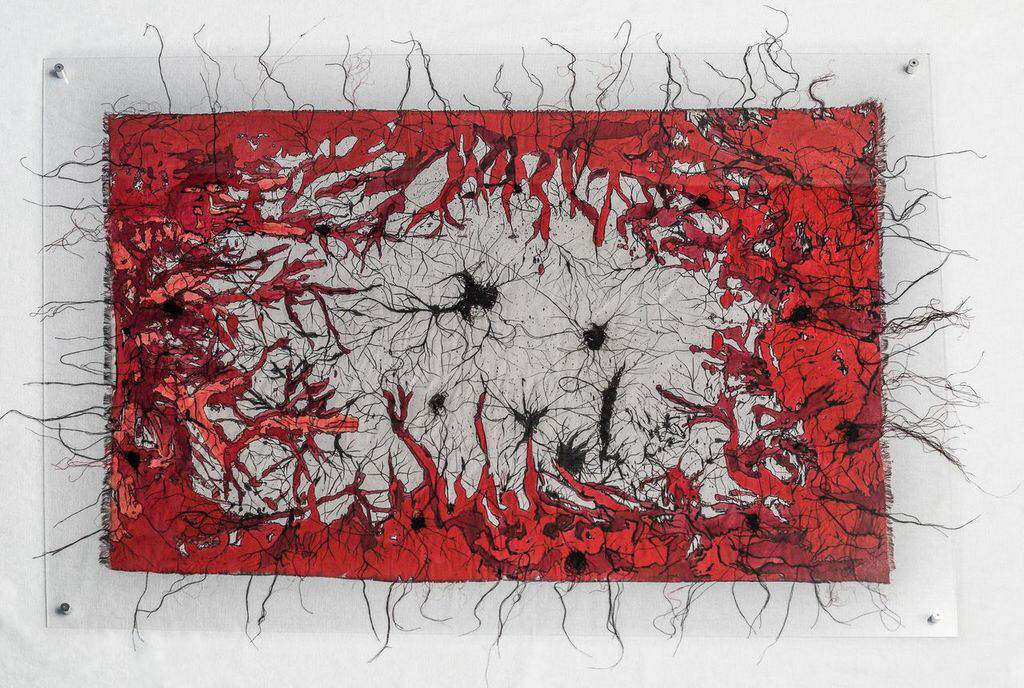
Alessandra Sequeira. Caligrafía cuántica. 97X70 cm. Ink and embroidery over silk.
By contrast, Silvia Piza-Tandlich has ample biennale and exposition experience throughout the world, including the 14th Łódź Triennial of Tapestry in Poland last year.
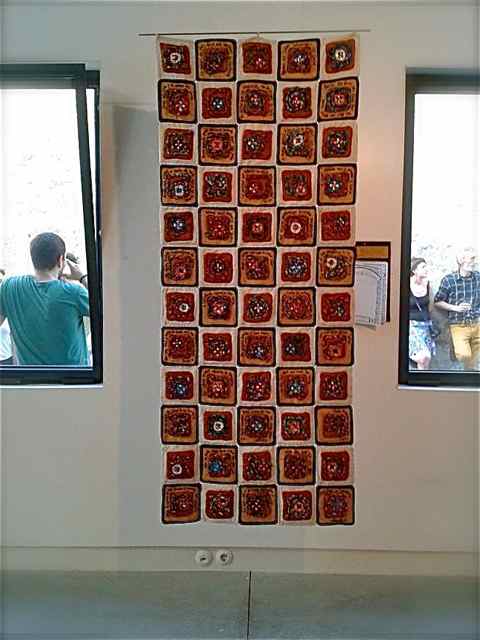
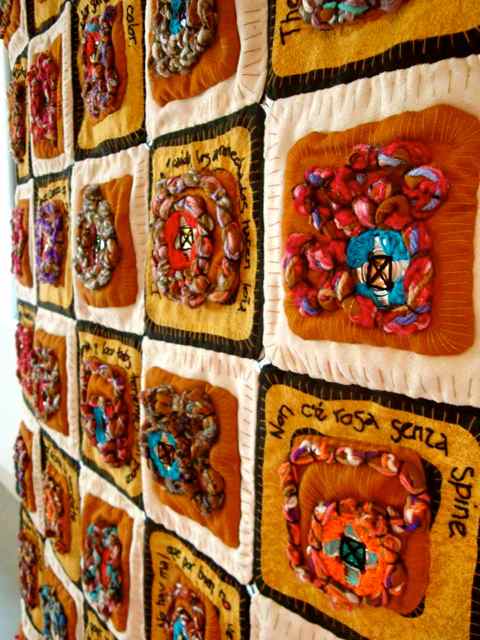
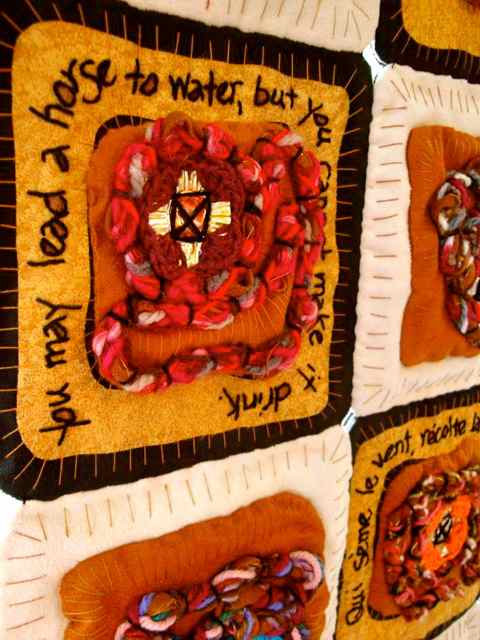
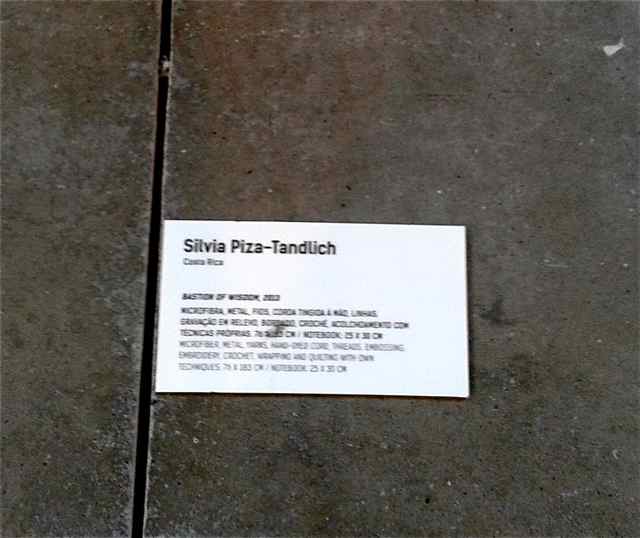
CONTEXTILE stands out by its proposed interaction between artists, creators, industry, community, and the city of Guimarães, which intends to strengthen the economy through innovation, creativity and appreciation of the textile identities of participating territories. Within the frame of this biennale’s social character, Silvia Piza-Tandlich offers artwork that is interactive with the public: “Bastion of Wisdom” is a double-sided piece showing hand embroidered proverbs in nine languages. She explains that refrains and proverbs exist in all cultures and become popular wisdom, with homologous concepts from language to language. The piece also has metal from tee-light candles, representing the whimsical human culture of wishing, and knowing.

Piza-Tandlich. Detail. Bastion of Wisdom. 76X183 cm. Artist’s own techniques over microfiber.
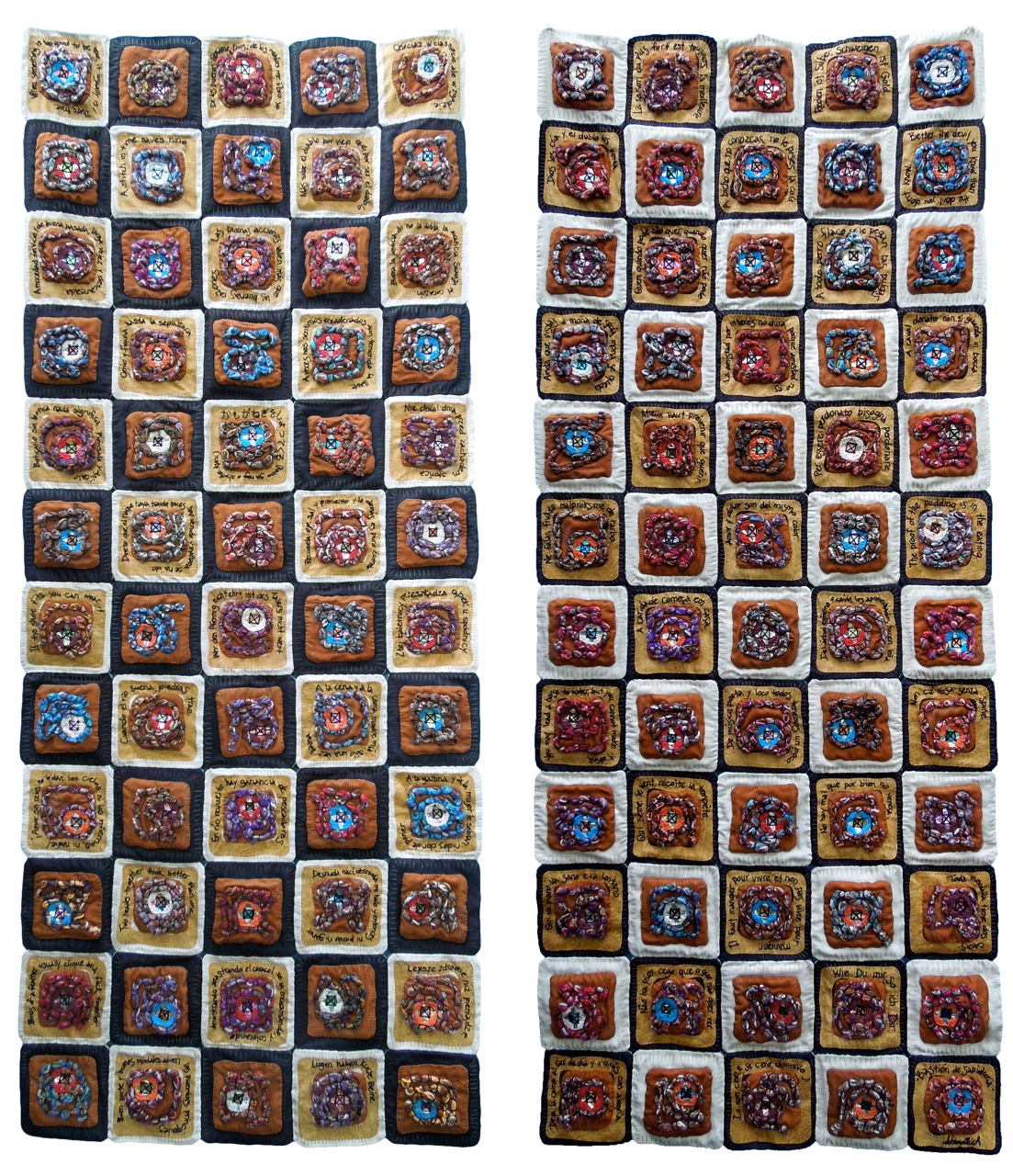
Silvia Piza-Tandlich. Bastion of Wisdom.
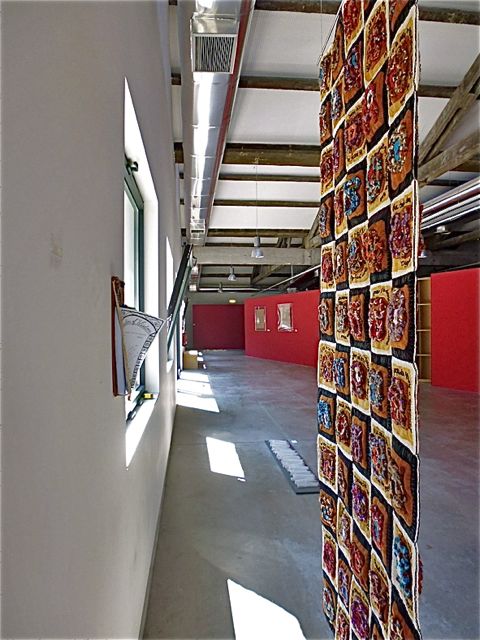
Piza-Tandlich. Bastion of Wisdom. Work in situ.
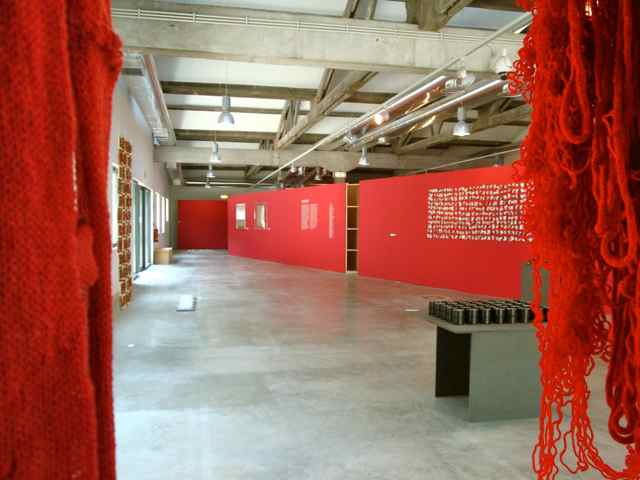
View of the entrance to CONTEXTILE biennale.
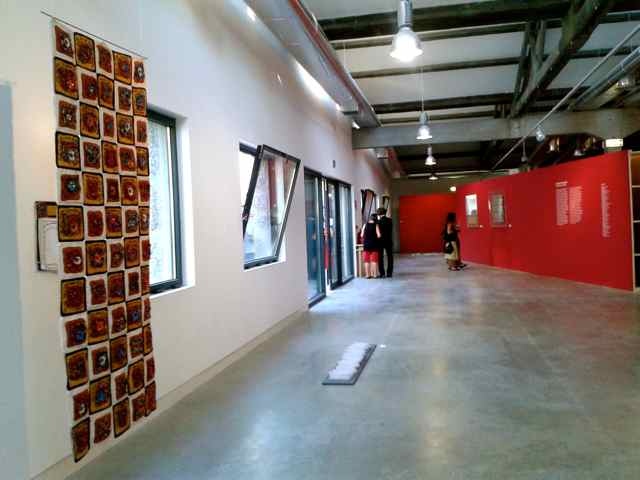
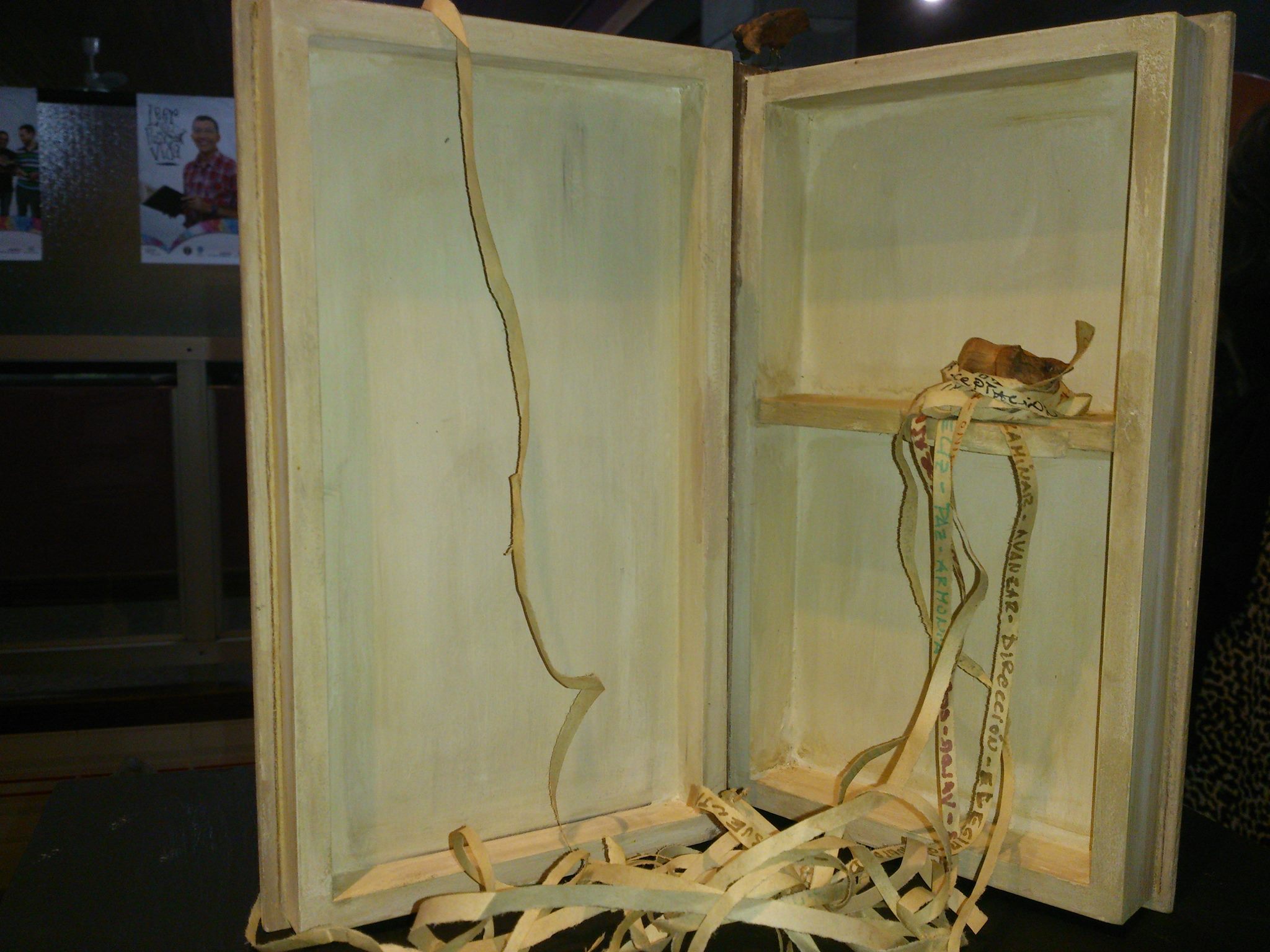
Patricia Rucavado. “Story of a nest”
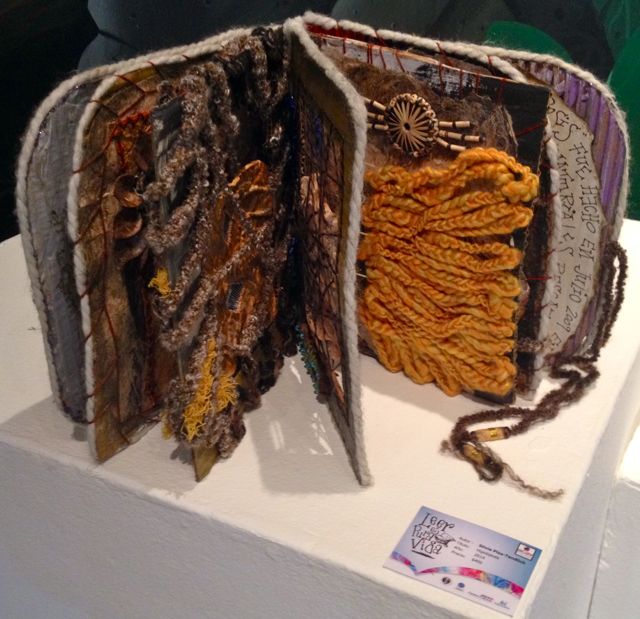
Silvia Piza-Tandlich. “Hypotyposis”. 12″ X 12″ X 4″.
A book of remnants.
Photo: Doreen Bákit
 Silvia Piza-Tandlich. “Hipotiposis”. 29 X 30 X 9 cm. Libro de retazos.
Xinia Matamoros. Traces of Life.
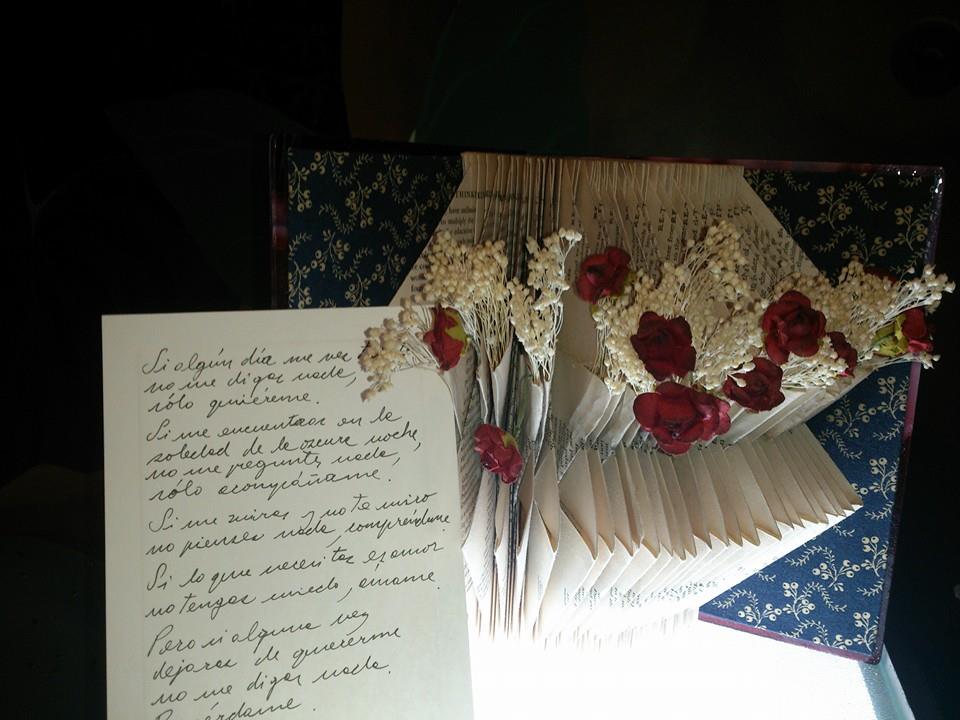
Oscar Carmona. “Feelings”
 opustextile