Wooden Knife Troubadour Takes To the Alley On Sunday – CUCHILLO ‘E’PALO EN EL CALLEJON

ALAJUELA, COSTA RICA:

Many artists (myself included) feel they must use their visual message to get closer to the people and of course, art must have social projection. Pristine walls to show our work don’t always let us reach everyone, not to mention the fact that often times our political message isn’t compatible with fancy places that could be intimidating to some people.

Algunos artistas, de los cuales no soy excepción, creen en su deber de hacer entrega de su mensaje visual de una manera más cercana a la gente y, por supuesto, su arte debe tener proyección social. Las paredes elegantes para exposición no siempre le llegan al público y nuestro mensaje político no es compatible con lugares elegantes, los cuales a veces más bien intimidan.

Therefore, it is safe to say that our identity is anchored by the way we project—and to whom, and in the case of Carlos Vargas Olivares, where.
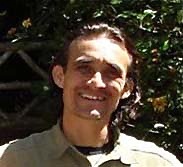
Nuestra identidad está anclada en la manera en que proyectemos, y a quién, y en el caso de Carlos Vargas Olivares, dónde lo hagamos. 

How: Carlos tickles and plays and pokes until he provokes what he refers to as, “our honest spot within ourselves,” making us recognize at least some of the multiple messages in his work. He wants to recycle, and help in the integration of bamboo structures as a green renewable material: presently he is searching for ways to include Costa Rican cabuya (sisal) braiding in the knotting of intersections of modular bamboo pieces, with the intention to create sustainable design alternatives.

Cómo: Carlos juguetea y provoca lo que describe como “el botón honesto dentro de nosotros”, para que reconozcamos algunos de los mensajes de su obra. El recicla y ayuda en la integración de estructuras de bambú como material orgánico renovable: actualmente explora maneras de incluir cabuya trenzada de Costa Rica en las intersecciones de piezas modulares de bambú, con intención de crear diseños alternativos sostenibles.

To Whom, and Where: To anyone who gets lured into his concept of “chunche” corner (chunche is Costa Rican slang for whatchamacallit), out there on a public park in the province of Alajuela, Costa Rica, where he’s been taking his Sunday installations for the past year. The motive is to show recycling within sisal knits, and trigger questions which trigger chats and awareness. Sisal has a wonderful aroma, and Carlos (aka Cuchillo’e Palo, or “Wooden Knife” in English), adds it to the entire sensorial setting in order to evoke time, space, and smell. He is, indeed, a weapon of art projection!
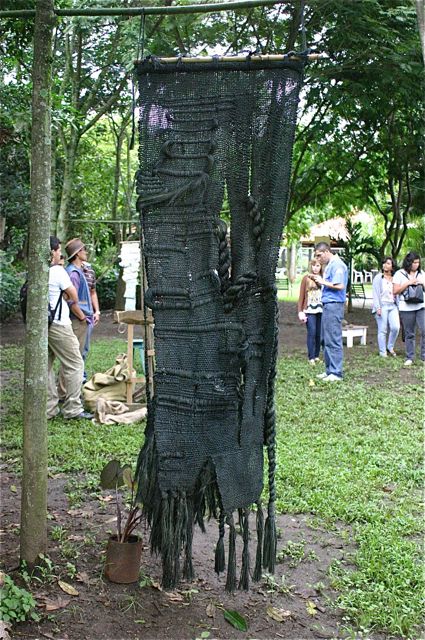
Para Quiénes, y Dónde: Para quienes se acerquen a su concepto de “esquina de chunches” (chunche es la palabra costarricense para definir cualquier cosa de la que no recordemos su nombre), allí por el parque de Alajuela en Costa Rica, en el pasaje donde ha venido llevando sus instalaciones los domingos, por un año. El motivo es mostrar sus tejidos en cabuya y provocar preguntas que provoquen tertulia y conocimiento. La cabuya tiene un delicioso aroma y Carlos, conocido como Cuchillo’e’Palo, usa ese aroma como parte de todo el conjunto sensorial, para evocar tiempo, espacio y olor. El es, sin duda, una arma de proyección artística.What: Jack-of-all-textile trades, and when it comes to style Carlos has coined his own label, which translates to “junk/object” although he’s also interested in experimentation, murals, mixed-media textiles, and ceramics.
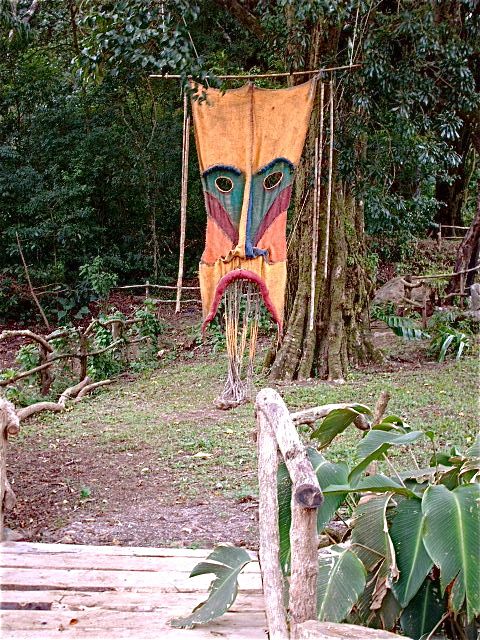
Qué: Hombre banda y cuando se trata de estilo, Carlos ha creado su propia etiqueta: “chunche objeto”, aunque también trabaja en experimentación, murales, textil de técnica combinada y cerámica. 

Contact: http://www.carlosvargasolivares.blogspot.com
—Silvia Piza-Tandlich
Notice: Carlos suffered a great fall from one of his structures recently, and it is my wish that he recovers soon and gets back to his alley!
Nota: Recientemente, Carlos sufrió una gran caída de una de sus estructuras y espero que se recupere y vuelva a hacer presencia en su callejón.

HOMAGE TO JORGE SOSA

HOMAGE: “Trama – Weft”

Dedicated to

Jorge Sosa Campiglia

Expositors:

Pablo Conde
Alejandra del Castillo
Nilda Echenique
Diego Masi
Sara Pacheco
Gustavo Real
Alicia Ubilla

October, 2010
MAPI Museum, Montevideo, Uruguay

A weft of friendships and brotherhoods

Seven renown artists—four women and three men—had a collective exhibit at the end of 2010.
This joint curatorial effort took installations linked to their most recent expressive worlds, and adapted them to this particular space.
The entire show was dedicated to tapicista (weaver) Jorge Sosa, and may be interpreted as Weft, or Warp, or Netting, or Plot, Theme, Plan, or Intrigue.
The first connotation supports and wraps, suggesting the work of two textile artists, both considered tapisserie creators and teaching pioneers in Uruguay: Jorge Sosa, who died in 2010, and Ernesto Aroztegui.
Aroztegui was also an enthusiastic founder of CETU (Centro de la Tapicería Uruguaya), the Center for Uruguayan Tapestry.
Although many students got close to textile and later adopted new materials and new expressive roads, the “textile touch”  of these two maestros was undeniable, and marked the lives of hundreds of people, forever.

—Silvia Piza-Tandlich, translation

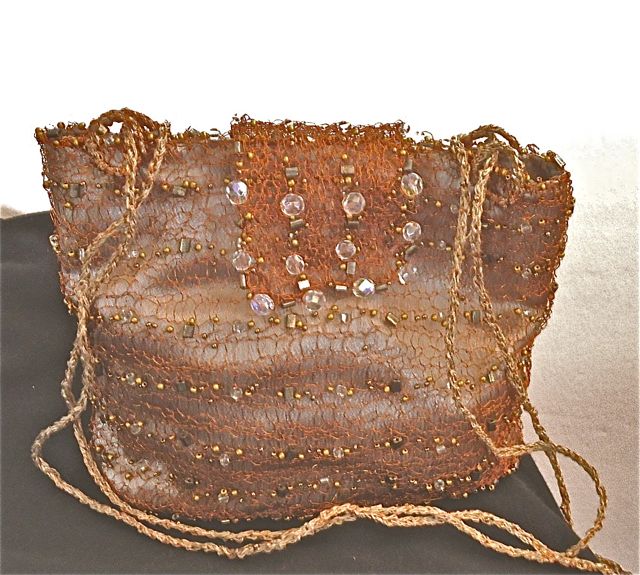
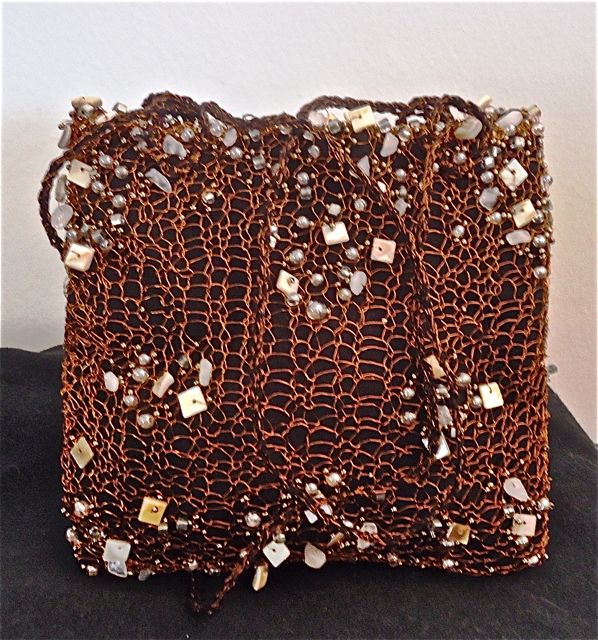
Sprang bags for sale – CARTERITAS A LA VENTA

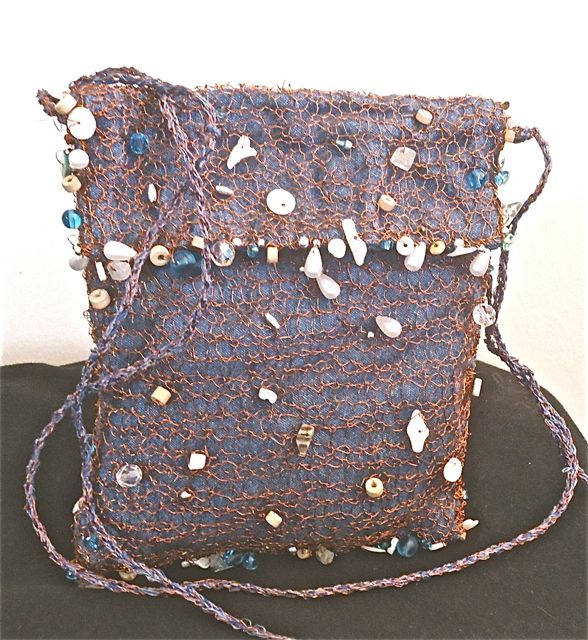
 They measure 6″ X 8″ (15 X 20 cm) and are absolutely adorable.
¡Miden 15 X 20cm y son divinas!
We have seen Beatriz Oggero’s beautiful, monumental sprang pieces (warp weaving)
hanging handsomely in museums and galleries.
Now she claims to make the little bags “during spare time”.

 Ya hemos visto las obras monumentales de Beatriz: piezas hechas en la

técnica sprang,
 las cuales cuelgan en museos y galerías de arte.
 Ahora ella dice hacer estas carteritas “en su tiempo libre”. ¡Dichosa!

Contact: 

Beatriz Oggero, Cochabamba, Bolivia
Phone: +591 4440 6940
Please see the article below to appreciate one of Beatriz’s works in sprang technique.


—Silvia Piza-Tandlich, translation

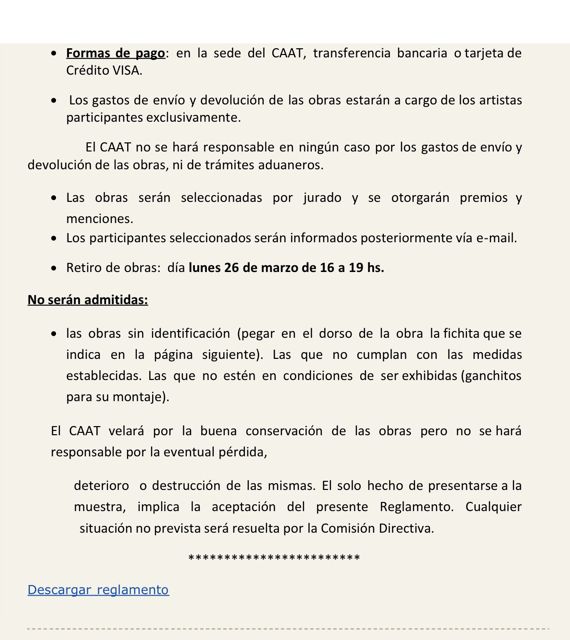
Call for artist participation – CONVOCATORIA

Collective show: “Free Composition”

Buenos Aires, Argentina

 The Argentine Centre for Textile Art

invites members and non-members to participate.

 Opening: March 2, 2012 at 7:00pm
Closing: March 23, 2012 at 7:00 pm

If you would like your work to be considered for this show and would like more information, please contact me.

—Silvia Piza-Tandlich

New Cultural Space In Buenos Aires

Faena Art Center: New Cultural Space In Buenos Aires

…o bicho suspenso na paisagen…

…a beast suspended within the landscape…

(These photos are not up-side down!)

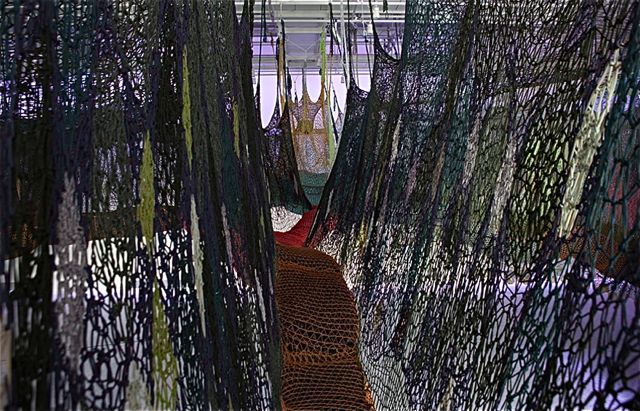
In September, 2011 Faena Arts Center opened its doors within the recycled neighborhood of Puerto Madero in Buenos Aires, Argentina. The majestic site could only open doors with an equally majestic textile bicho (beast) by the great Brazilean maestro Ernesto Neto, who suspended his crochet-based installation from ceilings and walls, and covered the nets with thousands of plastic balls.

The result is this enormous organic form that seems to float above ground inviting visitors to walk, climb, touch and get lost in its insides.

Gabriela Nirino is swallowed by Neto's bicho

It took 30 assistants to help Neto create and install the beast.

Curated by Jessica Morgan, the exhibit is open to the public through February, 2012 and it’s a “must see, must feel” experience.

http://www.faenaartscenter.org/exhibition/11/ernesto-neto


—Silvia Piza-Tandlich

“HERBARIO” in Antigua, Guatemala

“HERBARIUM” EXPOSITION

 at “El Sitio”  – ANTIGUA-GUATEMALA

January 14 – March 8, 2012

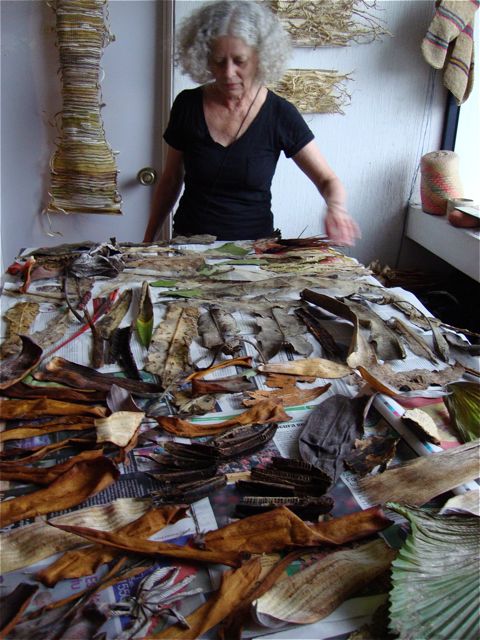
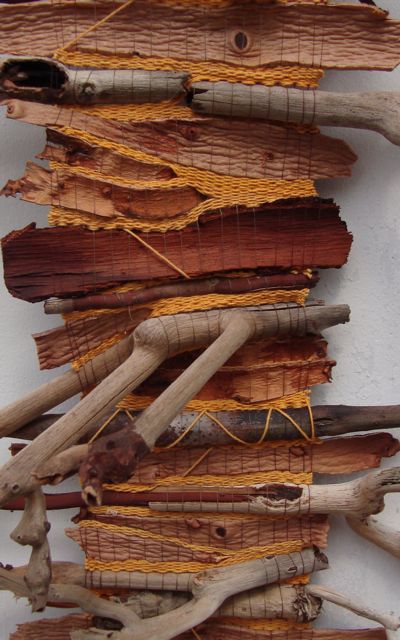
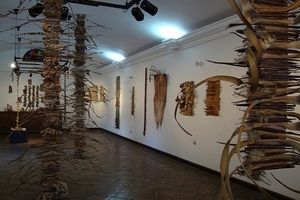
Marie-Noëlle Fontan’s prime materials are plants and their own forms and textures: roots, stems, pods and leaves, which maintain their form but not their order. This material is collected during Marie-Noëlle’s frequent travels.

Tangling, handling, spinning and weaving plants on her loom, she achieves her own form of landscaping to nourish our senses and imagination.


Marie-Noëlle’s work can be deemed as a return to the natural sources in textile art.

This week she inaugurated her exhibition “HERBARIO” in Guatemala, which will be open to the public until March 8.

Contact the artist: www.marie-noelle-fontan.com

—Silvia Piza-Tandlich, translation

Perceptions in Spain

Luis Acosta is a fiber artist from Argentina living in Holland, whose textile jewelry is being exhibited throughout the world. His next exposition will take place in Salamanca, Spain.

Luis Acosta es artista textil argentino y reside en Holanda. Su joyería textil se exhibe en todo el mundo y esta nueva exposición suya —titulada Percepciones— se lleva a cabo en Salamanca (España) del 3 de febrero al 4 de mayo de 2012.

PERCEPTIONS

Jewelry & Mural Objects

February 3 – May 4, 2012 – Arts & Crafts Galería

Contact the artist: www.luisacosta.nl

—Silvia Piza-Tandlich, translation

11th ART INTER/NATIONAL COMPETITION

SDA members Silvia Piza-Tandlich (Costa Rica), and Irina Dorofeeva (Russia) have been selected to exhibit in this year’s 11th Art Inter/National competition. These two selections are the only textiles pieces chosen from over 500 proposals from all over the world in all artistic mediums.

Nicole Cappozi, owner and director of BoxHeart Gallery, explains: “The basis for an invitation to participate in The Art Inter/National Exhibition is sensitive to the diversity of work submitted; Box Heart strives to recognize that artists make art for different reasons and from different experiences. Box Heart looks closely for works that convey evidence of personal creative explorations and artistic commitment that directly relate to the purpose of the exhibition. A large part of determining the artist’s commitment to the exhibition’s theme rests solely on their ability to convey this evidence through the artist statement. The execution of the art work – as related to the artist’s intention – is then considered. Over 500 entries, from regional, national, and international artists, were received this year. Of these entries, 20 artists were selected for participation and 25 works of art in a variety of media will be exhibited.

With an ability to see scenes as a collection of lines, shadows, shapes, and contours, artists tend to see the world as it actually is. This form of seeing is the impetus behind all change. And when manifested into art, becomes the foundation for a scientifically informed account of the mind. The artwork selected for this year’s Art Inter/National Exhibition is unified by a wider appreciation for the many dimensions of uncertainty.” 

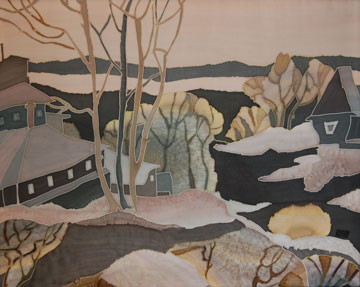
 Artist Irina Dorofeeva grew up in Russia and later moved to Indiana, USA. Often her silk works focus on nature and are inspired by landscapes, both Russian and American. She is touched by the remembrance of forests, fields, rivers, and small countries in Russia. But she is also inspired by the beautiful lakes, mountains, and shore lines in the U.S.. All these themes interconnect in her work and are the source of her art.

Silvia Piza-Tandlich is SDA Latin America/Caribbean area REP. Her handmade work, “Still In Time” is a point of convergence of past and present materials and techniques depicted in a double-sided Indigenous piece hanging from the ceiling.

3rd BAZART UC in Santiago, Chile

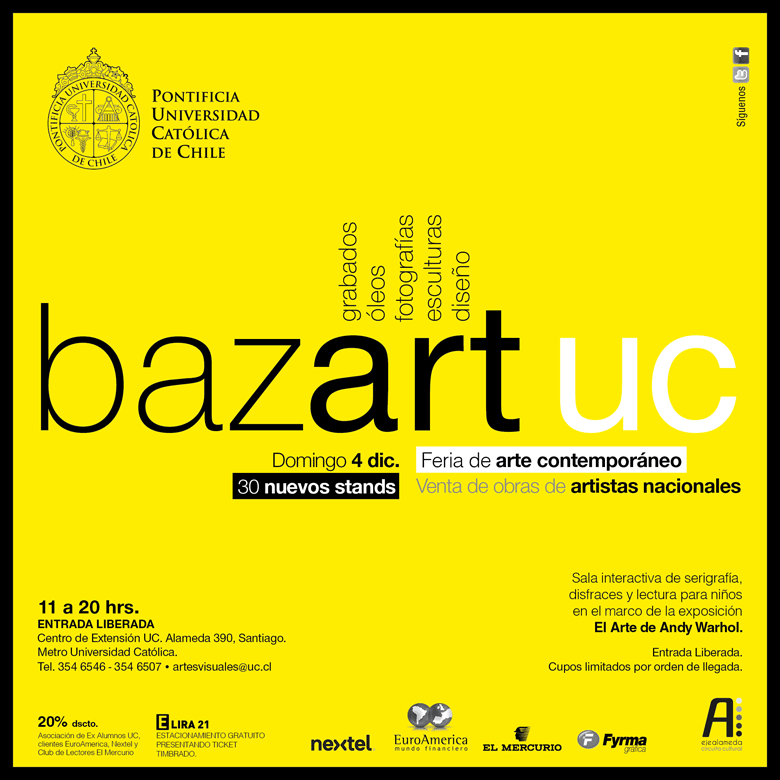
If you happen to be in the neighborhood this Sunday, December 4, Pontificia Catholic University of Chile presents the Third BazartUC Fair of Contemporary Art, featuring 30 stands with works by national renown and emerging artists. Entrance free of charge.

There will also be an interactive salon about the Art of Andy Warhol, with an engraving workshop, costumes and children activities.


Textile artists Andrea Fischer and Inge Dusi are active participants in this event.

The address if on the lower left hand side of the invitation for your review.

—Silvia Piza-Tandlich, translation